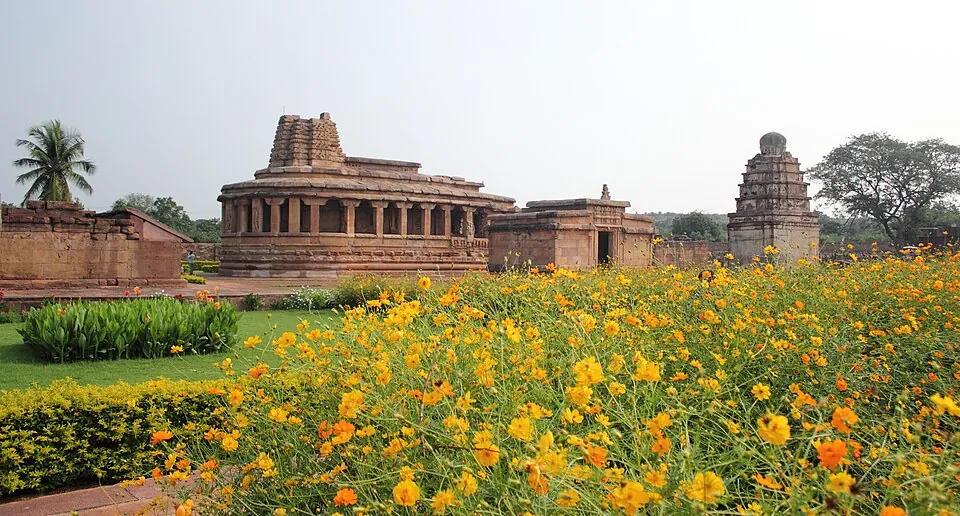
Aihole, Cradle of Chalukya Temple Experiment
Aihoḷe · ऐहोळे
Aihole, in Karnataka's Bagalkot district, holds over a hundred Hindu, Jain and Buddhist stone and cave monuments, built from the sixth to the twelfth century. By the sixth century it was a laboratory for temple design under the Chalukyas, preparing the way for the monuments at Pattadakal.
Aihole, known also by the names Aivalli, Ahivolal and Āryapura, is a historic site on the Malaprabha river in Karnataka with Buddhist, Hindu and Jain monuments spanning the sixth to twelfth centuries, most of them from the seventh to tenth. More than 120 stone and cave temples lie among farmland and sandstone hills, about 35 kilometres from Badami and some ten from Pattadakal, both major Chalukya centres. Together with Badami, Aihole emerged by the sixth century as a testing ground for temple architecture, sculpture and building methods. Builders there tried out about sixteen types of free-standing temple and four types of rock-cut shrine, and the experiments carried through to the monuments of Pattadakal, now a UNESCO World Heritage Site. The great majority of the temples, over a hundred, are Hindu; a handful are Jain and a single one is Buddhist, all standing close together. Hindu shrines honour Śiva, Viṣṇu, Durgā, Sūrya and other deities, while the Jain basadis are dedicated to tīrthaṅkaras including Mahāvīra, Pārśvanātha and Neminātha. The complex also includes monasteries, a stepwell and carved water tanks. It offers a rare view of religious coexistence in early medieval Karnataka.