Jogeshwari Caves Carved in Mumbai
The Jogeshwari caves in a northern suburb of Mumbai are among the earliest Hindu cave temples, cut in the sixth century in the Chalukya period. Walter Spink ranks the site first among India's major cave temples in age. Panels show Shaiva themes and a Pashupata link.
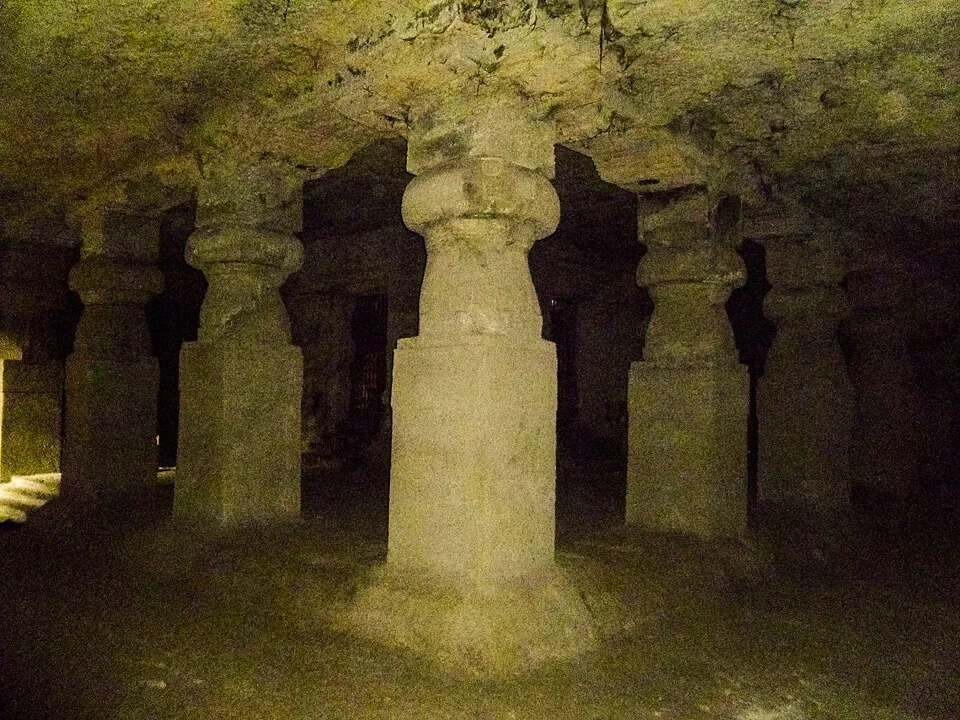
Hidden in the suburb of Jogeshwari, in the north of Mumbai, a vast cave complex preserves some of the oldest Hindu rock sculpture in the country. Its carving is assigned to the sixth century during Chalukya times. Walter Spink argues that it is the oldest major cave temple in the country and, by total length, the largest. A long flight of steps leads down into a pillared main hall with a lingam at the far end, and later images of Dattatreya, Hanuman and Ganesha line the walls, together with two guardian figures. Visitors also find the image and footprints of the goddess Jogeshwari, also called Yogeshwari, who gives the area its name and is a family deity for some Marathi people and some Gujarati groups. The caves belong to the Pashupata tradition, and six sculpted panels show Shaiva episodes, including the marriage of Śiva and Pārvatī and Śiva accepting Rāvaṇa as a disciple. The date given is approximate.
Sources
- Jogeshwari Caves Wikipedia · CC-BY-SA-4.0
- Q6214734 Wikidata · CC0-1.0