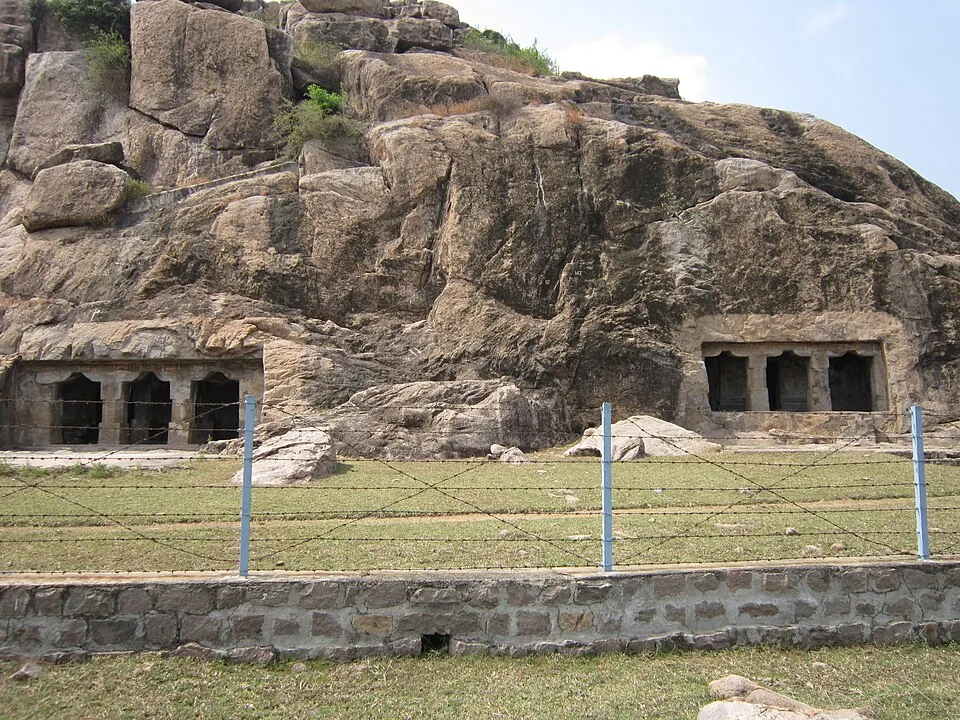
Mahendravarman Cuts Cave Temples at Mamandur
Mamandur, near Kanchipuram, preserves seventh-century rock-cut caves attributed by their inscriptions to the Pallava king Mahendravarman I. Known for inventive titles and a love of art, he pioneered cave temples across Tamil Nadu and left a protected monument of national importance.
Near the village of Mamandur on the road between Kanchipuram and Vandavasi lie rock-cut cave temples that inscriptions assign to the Pallava ruler Mahendravarman I in the early seventh century. The king delighted in titles such as Vicitracitta, the curious-minded, and Citrakārapuli, tiger among artists, and he is treated as one of the great patrons of south Indian art. He introduced the practice of cutting temples directly from living rock in the Tamil country, and similar caves are found at Mamallapuram, Pallavaram, Siyamangalam, Singavaram and Tiruchirappalli. At Mamandur the principal deity of the first cave is Narasiṁha, while the second is known from later inscriptions as a Śaiva shrine. The caves look out over the Palar river, and a nearby tank, linked to the king, belongs to the same landscape of works. The Archaeological Survey of India has declared the monument one of national importance. The year given is approximate, taken from the early seventh-century reign of the king.