Kāñcīpuram: Pallava Capital of Temples
Kāñcīpuram · காஞ்சிபுரம்
Kāñcīpuram in Tamil Nadu served as the Pallava capital and is known as the City of Thousand Temples. Its monuments, including the Kailāsanātha and Vaikuṇṭha Perumāḷ temples, reflect Pallava architecture, and the city long held importance as a centre of learning.
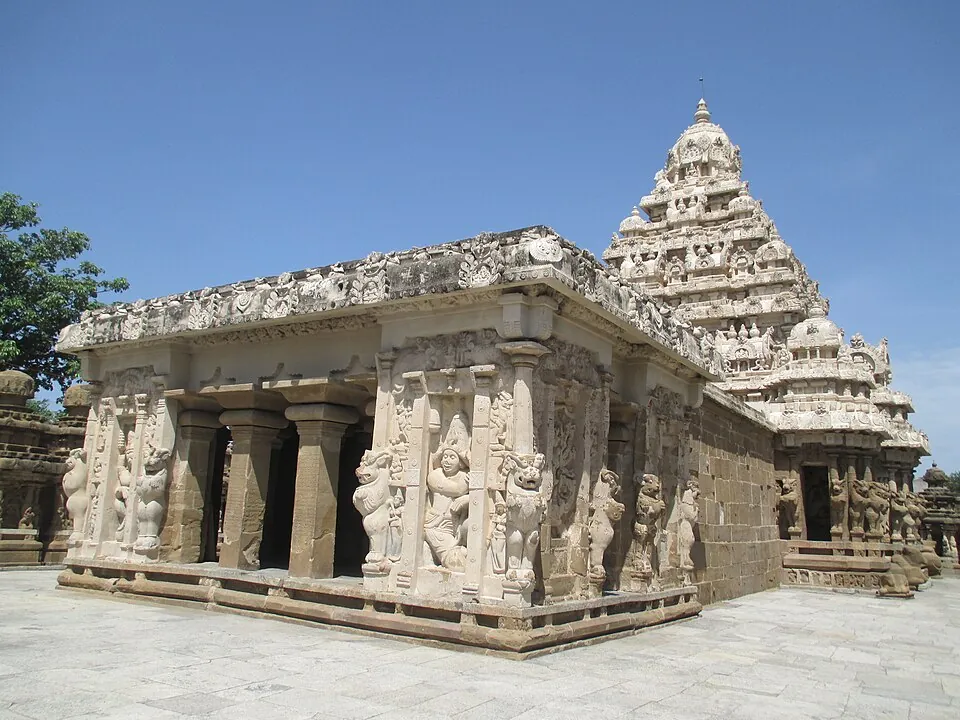
Kāñcīpuram, also spelt Kanchipuram or Conjeeveram, stands on the Vegavathi and Palar rivers within the Chennai metropolitan region of Tamil Nadu. Under the Pallava dynasty it was a major capital, and its seventh and eighth-century temples are among the finest early examples of South Indian stone architecture. The Kailāsanātha and Vaikuṇṭha Perumāḷ shrines are the best-known. In subsequent centuries the city came under the Cholas, then Pāṇḍya rulers, Vijayanagara, the Carnatic nawabs and finally the British. Historically it was a ghaṭikāsthāna, a 'place of learning', and between the first and fifth centuries it was also an important seat of advanced education for Jain and Buddhist communities. For Vaiṣṇavas it is one of the seven sacred cities that grant liberation. Today Kāñcīpuram is also known for its silk saris and large temple towers. The year given here marks the middle of the Pallava period of temple building, and does not date the foundation of the city, which is considerably older. Its name is often explained as meaning the city of the kāñcī flower.
Sources
- Kanchipuram Wikipedia · CC-BY-SA-4.0
- Q212332 Wikidata · CC0-1.0