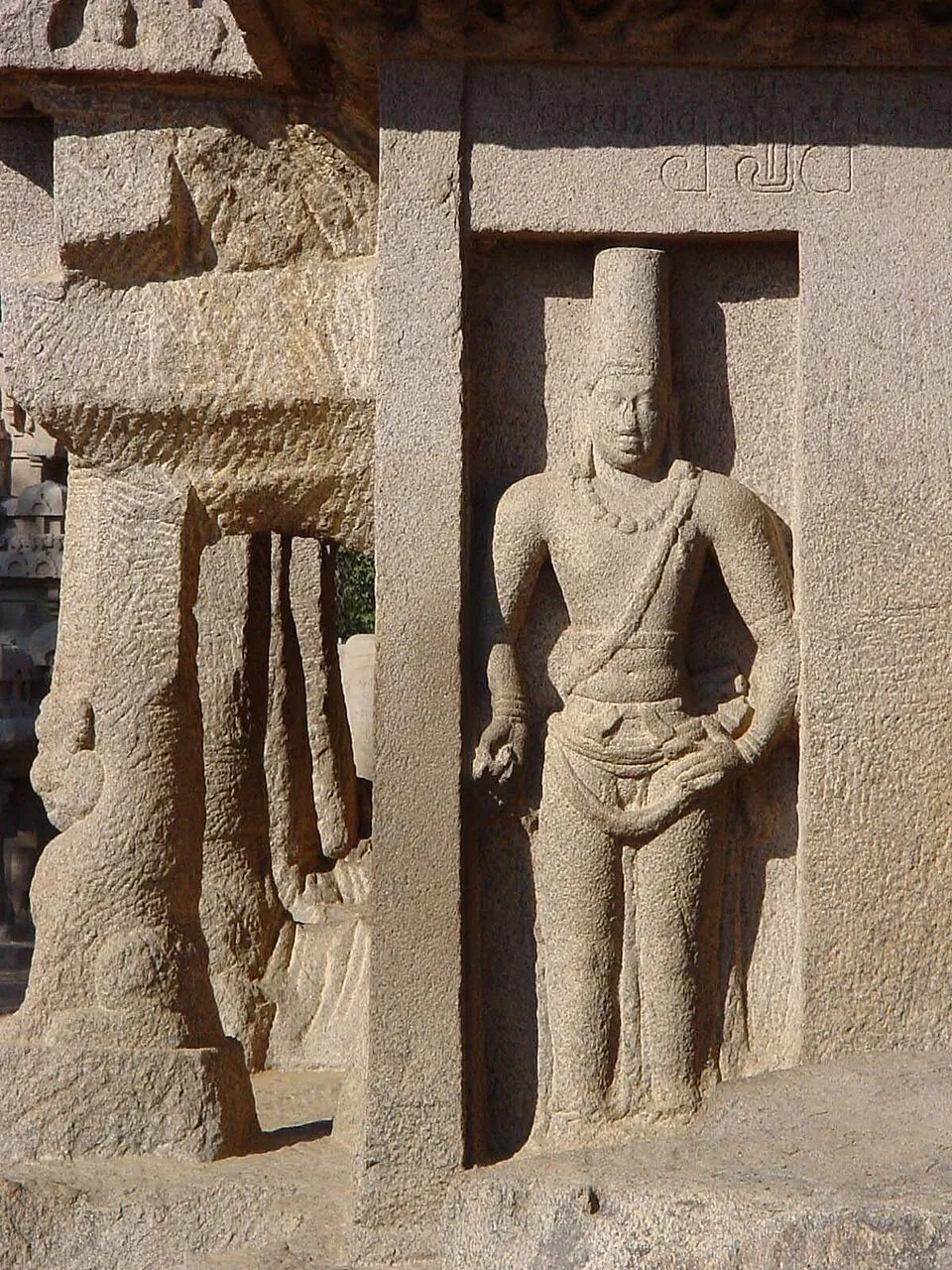
Narasiṃhavarman I, Pallava Emperor and Builder of Māmallapuram
Narasiṃhavarman I · नरसिंहवर्मन् प्रथम
Narasiṃhavarman I, known as Māmalla the great wrestler, ruled the Pallava kingdom from 630 to 668. He avenged his father's defeat by the Chalukya king Pulakeśin II and completed the rock-cut works at Māmallapuram, including the Pañca Rathas, now a World Heritage Site.
Narasiṃhavarman I held the Pallava throne in southern India between 630 and 668. Like his father Mahendravarman I, he loved for the arts and finished the projects that Mahendravarman had begun at Māmallapuram on the Coromandel coast. During his reign the Pañca Rathas, a group of monolithic temples carved from rock that is now a UNESCO World Heritage Site, were created. He is also remembered for the military success of 642, when he avenged his father's earlier defeat at the hands of the Chalukya ruler Pulakeśin II. His title Māmalla, meaning great wrestler, gave its name to the seaport town, today called Māmallapuram or Mahabalipuram. Sri Lankan chronicle tradition, the Cūlavaṃsa, mentions him with an epithet that historians relate to the later Kaḍava chiefs, hinting at early ties between the Pallavas and that lineage. His rule also coincided with the visit of the Chinese pilgrim Xuanzang to the Pallava capital at Kāñcī around 640. Together these events make his reign a high point of early medieval South India.
Sources
- Narasimhavarman I Wikipedia · CC-BY-SA-4.0
- Q3537058 Wikidata · CC0-1.0