Mahākūṭa Temples Rise Under Early Chalukyas
Mahākūṭa · ಮಹಾಕೂಟ
The Mahākūṭa group of temples in Bagalkot district, Karnataka, was built by the first Chalukya kings of Bādāmi in the sixth or seventh century. The site is an important Śaiva centre, and a pillar inscription dated between 595 and 602 helps to fix its chronology.
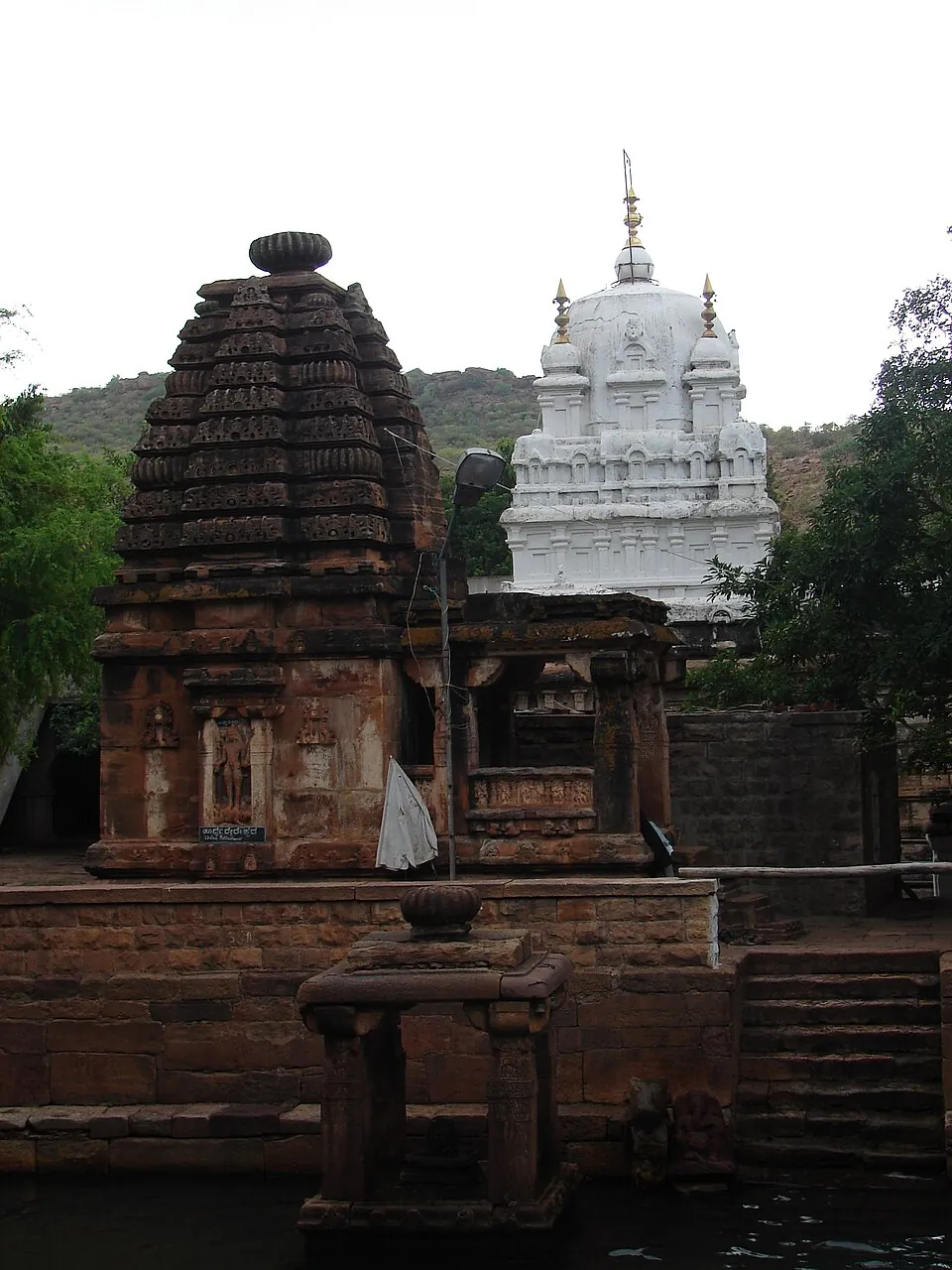
Mahākūṭa is a village in the Bagalkot area of Karnataka that holds a group of temples and has long been a significant Hindu worship place, home to a well-known Śaiva monastery. The temples are dated to the sixth or seventh century CE and were raised by the first rulers of the Bādāmi Chalukyas. The dating rests on the architectural style, which resembles the temples at nearby Aihoḷe, and on two inscriptions in the complex. One is the Mahākūṭa pillar inscription, written in Sanskrit in the Kannada script and dated between 595 and 602, which records a gift by the king Maṅgaleśa. The other, in Kannada, records a donation made by Vinapoti, a concubine of King Vijayāditya, and falls between 696 and 733. The sanctuaries are arranged around a sacred pool fed by a spring, a setting typical of early pilgrimage places in the Deccan. Together they illustrate the experimental phase of Chalukya architecture, in which northern and southern temple forms were studied and combined. The date used is a representative one for the temples rather than a foundation year.
Sources
- Mahakuta group of temples Wikipedia · CC-BY-SA-4.0
- Q283287 Wikidata · CC0-1.0