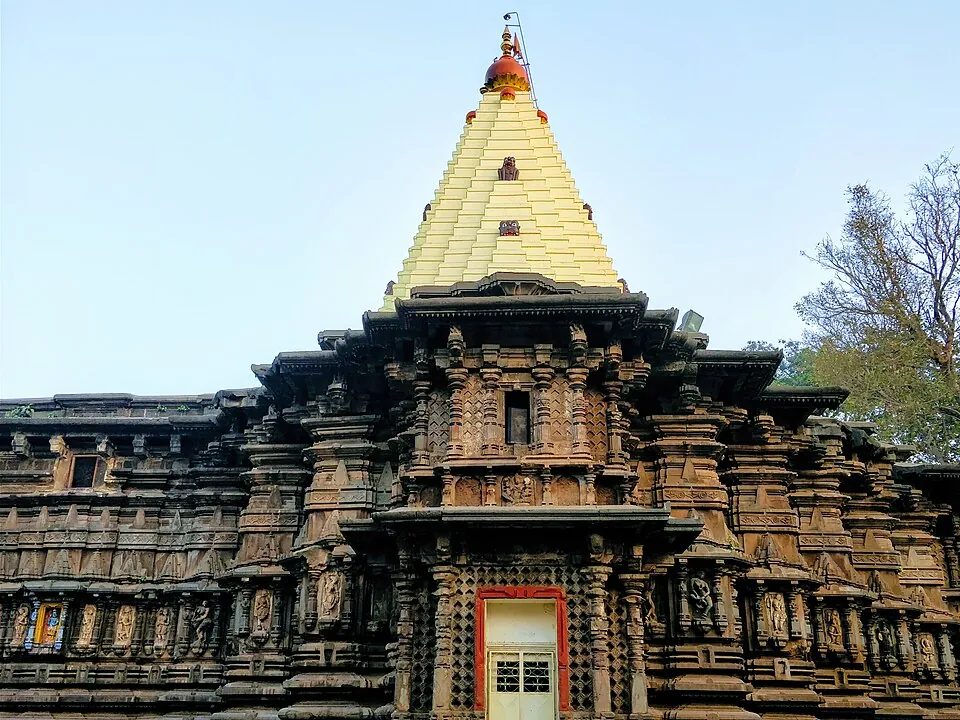
Mahālakṣmī Temple of Kolhapur
Mahālakṣmī · महालक्ष्मी
The Mahālakṣmī, or Ambābāī, temple at Kolhapur honours the goddess Lakṣmī and is counted as one of the three and a half Śakti Pīṭhas of Maharashtra. Its early fabric is commonly attributed to the Chalukya period, around the seventh century.
The Mahālakṣmī temple, popularly called Ambābāī, stands at Kolhapur in Maharashtra and honours the goddess as consort of Viṣṇu. Pilgrimage custom pairs it with Tirumala's Veṅkaṭeśvara temple and the Padmāvatī shrine at Tiruchanur, and devotees believe that visiting these places leads toward liberation. The temple is also reckoned among the three and a half Śakti Pīṭhas of the Śākta tradition. Local sacred history says the goddess appeared here to destroy the demon Kolāsura, a story belonging to devotion and not to dated history. Architectural historians usually ascribe the earliest structure to the Chalukya era, around the seventh century, and note later additions under Śilāhāra and Yādava patrons and further rebuilding over the centuries. The black stone image of the goddess is the focus of worship, and the temple city has long been a major religious centre of the Deccan, attracting pilgrims for festivals such as Navarātri. The date here is approximate and indicates only the traditional period of origin, since the building has been altered many times.
Sources
- Mahalakshmi Temple, Kolhapur Wikipedia · CC-BY-SA-4.0
- Q3595240 Wikidata · CC0-1.0