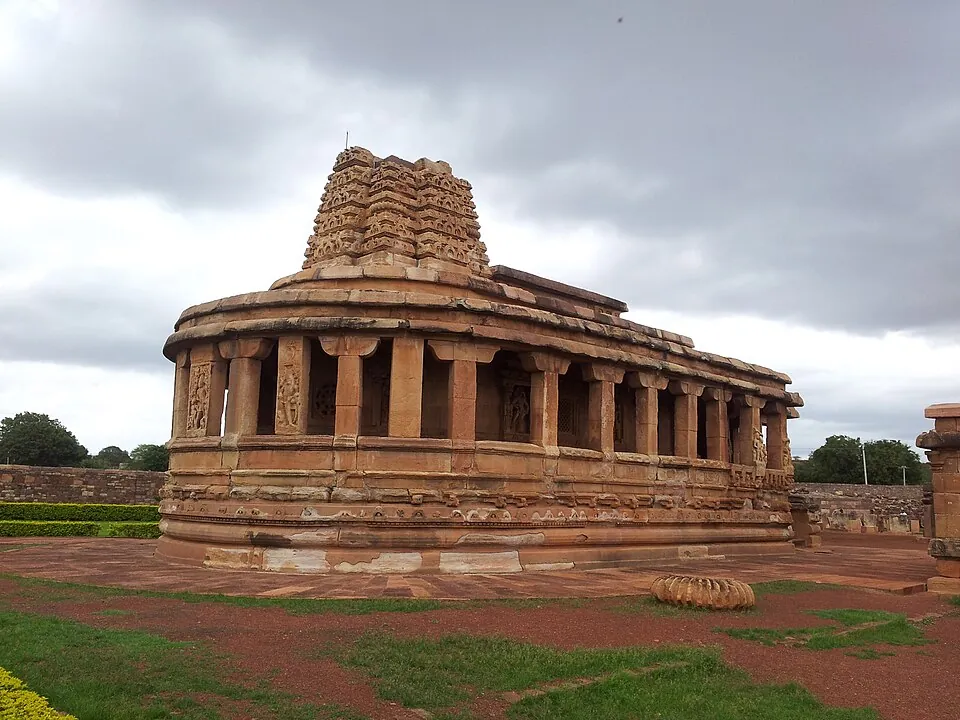
Durga Temple at Aihole, an Apsidal Surya Shrine
The Durga temple at Aihole in Karnataka dates to the early eighth century and belongs to the early Chalukya building tradition. Despite its name it was first a shrine to Sūrya. It is known for lavish relief panels and an unusual apsidal plan.
At Aihole in northern Karnataka, the Durga temple is one of the most admired monuments of early Chalukya architecture. It is assigned to the early eighth century. The building was originally dedicated to Sūrya, the sun god, and its present name has nothing to do with the goddess: it comes from a later period, probably after the thirteenth century, when a durg, a fortified lookout, was raised on its roof during the wars between Hindu kingdoms and the Islamic sultanates. That rubble structure remained until the site was rediscovered in the nineteenth century and was later removed during restoration. The temple's apsidal plan, with a rounded rear end, is rare among Chalukya monuments. Its carved panels are the largest and richest in Aihole, and they show figures from Śaiva, Vaiṣṇava, Śākta and Vedic traditions side by side. For scholars of temple art it is a key site for studying how early Deccan builders experimented with form. It is also part of a pending application for UNESCO World Heritage status.
Sources
- Durga temple, Aihole Wikipedia · CC-BY-SA-4.0
- Q3517553 Wikidata · CC0-1.0