Indian Kings Repel Umayyad Advances in the West
In the 720s to 740s CE, Indian kings of the west, including Nāgabhaṭa I of the Pratihāras and Pulakeśin of the Chalukyas, fought a series of battles against Umayyad forces from Sindh. By about 743 the Arabs had lost their gains in Rajasthan and Gujarat and expansion into India halted.
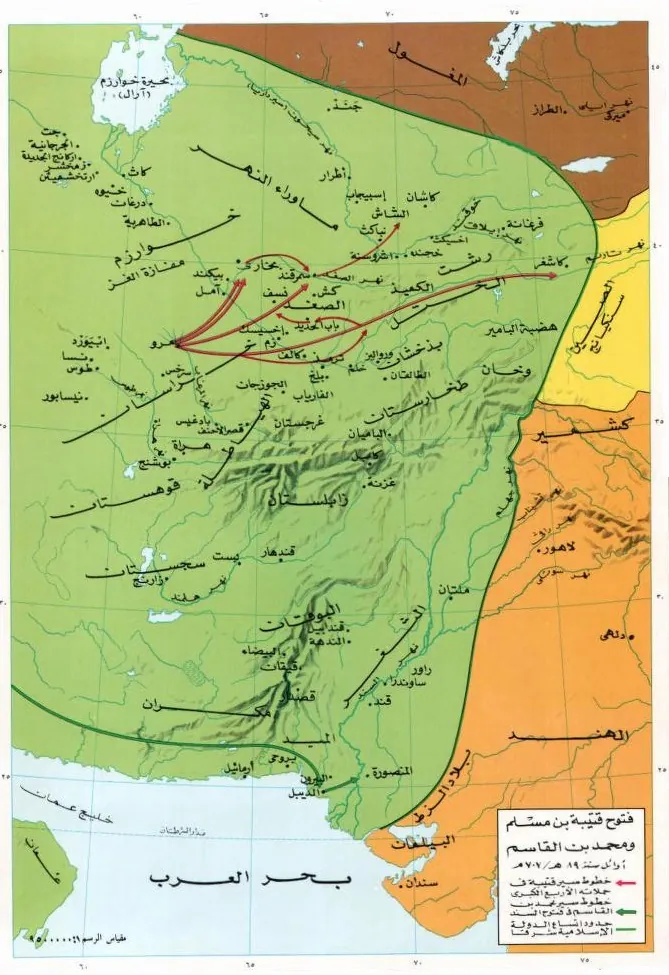
In the first half of the eighth century a series of clashes took place between the Umayyad Caliphate and Indian kingdoms east of the Indus. After Muḥammad ibn al-Qāsim's conquest of Sindh in 711 to 713, the Arabs used it as a base for raids further east. In the 720s Junayd ibn ʿAbd al-Raḥmān al-Murrī pushed into Gujarat and parts of Rajasthan, and met resistance from rulers including the Pratihāra Nāgabhaṭa I, the Maitraka Śīlāditya IV and the Chalukya Vikramāditya II. The Arab forces also advanced into Mālava. Under al-Ḥakam ibn ʿAwāna they took Gujarat and part of Rajasthan again, until their decisive defeat near Navsārī in 739, at the hands of Avanijanāśraya Pulakeśin, who served Vikramāditya II as a general. Further north, Lalitāditya Muktāpīḍa of Kashmir and Yaśovarman of Kannauj checked them in the Punjab. The Arabs had lost their holdings in Rajasthan and Gujarat by 743. This reversal coincided with wider Umayyad troubles and a long pause in expansion, which meant that their rule in India remained confined largely to Sindh. The clashes were spread across several decades.
Sources
- Umayyad campaigns in India Wikipedia · CC-BY-SA-4.0
- Q4087317 Wikidata · CC0-1.0