Lalitāditya Muktāpīḍa, Greatest King of Kashmir's Karkoṭas
Lalitāditya Muktāpīḍa · ललितादित्य मुक्तापीड
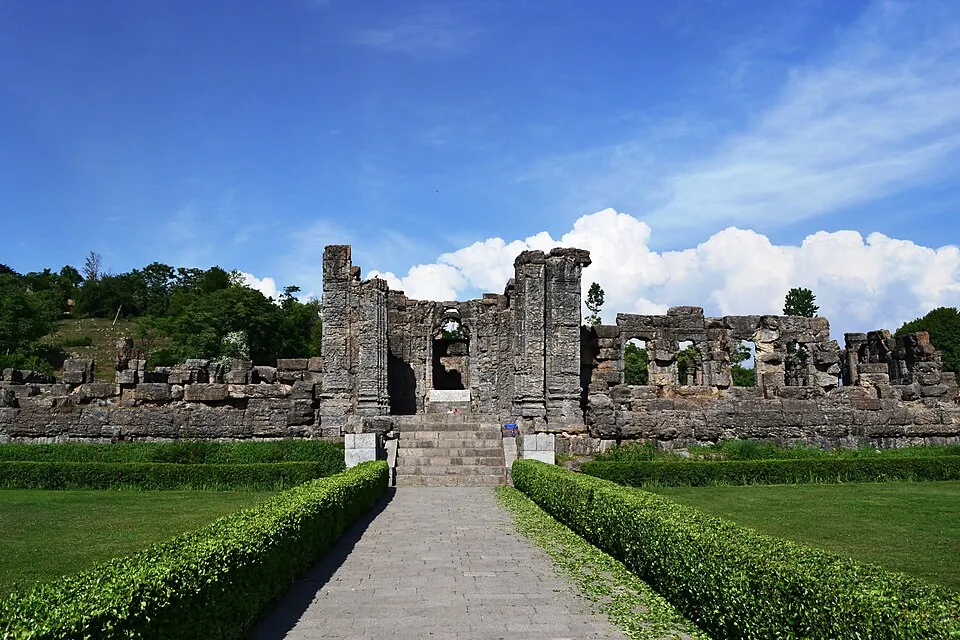
Lalitāditya Muktāpīḍa ruled Kashmir from about 724 to 760 CE as the most powerful Karkoṭa king. Kalhaṇa's chronicle calls him a conqueror of the world, but modern scholars treat that as exaggeration. He built the Mārtāṇḍa Sun Temple and founded Parihāsapura.
Lalitāditya Muktāpīḍa was a Karkoṭa ruler of Kashmir who reigned from about 724 to 760. The twelfth-century chronicler Kalhaṇa, in the Rājataraṅgiṇī, portrays him as a world conqueror with miraculous powers, who campaigned across India and Central Asia. Contemporary records do not support that account, and historians largely regard it as inflated, though they accept that he was the strongest king of his line. Chinese chronicles of the Tang dynasty describe him as a vassal-ally, and his part in Tang campaigns may have fed the later image of him as a great conqueror within Kashmir. His reign is also remembered for building. He commissioned several shrines in the valley, among them the Mārtāṇḍa Sun Temple, whose ruins remain impressive though the temple is long destroyed. He established towns too, including Parihāsapura, which he made his new capital. Lalitāditya therefore stands at a meeting point of legend and evidence: a real and capable ruler whose achievements were magnified in memory, and whose patronage left lasting monuments in the landscape of Kashmir.
Sources
- Lalitaditya Muktapida Wikipedia · CC-BY-SA-4.0
- Q335276 Wikidata · CC0-1.0