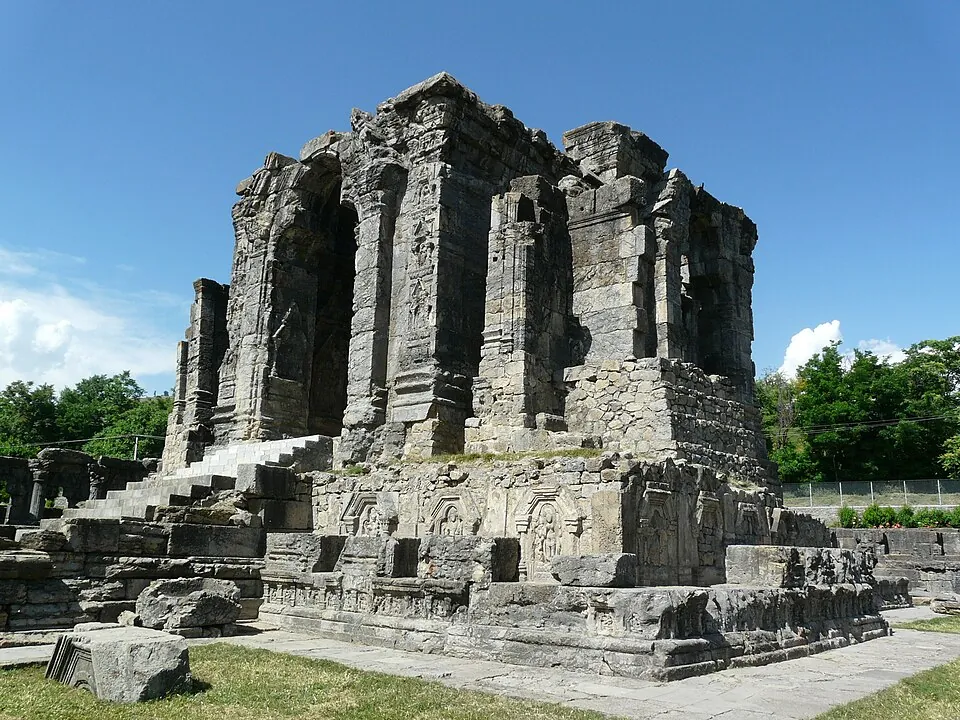
Mārtaṇḍa Sun Temple Rises in the Kashmir Valley
Mārtaṇḍa · मार्तण्ड
The Martand Sun Temple at Mattan, near Anantnag in Kashmir, dates to the eighth century CE and honoured Sūrya, also known as Mārtaṇḍa. Sikandar Shah Miri later had it destroyed, but its monumental ruins still stand there and draw visitors today.
The Martand Sun Temple stands at Mattan, a village of Anantnag district in the Kashmir valley. Built in the eighth century CE, it was dedicated to Sūrya, the solar deity, whose Sanskrit synonym Mārtaṇḍa gives the shrine its name. Tradition links its construction to the Karkoṭa dynasty that ruled Kashmir in this period, and its design reflects the region's distinctive blend of influences. The temple was eventually destroyed under the sultan Sikandar Shah Miri, and what stands today is a ruin whose ranges of columns and fallen stonework still convey the scale of the original sanctuary. The site is also recorded in Wikidata as an eighth-century Hindu temple in the area of Ranbir Pora, or Kehribal. As one of the notable monuments of early medieval Kashmir, the ruins continue to attract visitors and scholars studying the history of sun worship and temple architecture in northern India. The year used here, 725, is an approximate marker within the eighth century for the temple's construction.
Sources
- Martand Sun Temple Wikipedia · CC-BY-SA-4.0
- Q6774201 Wikidata · CC0-1.0