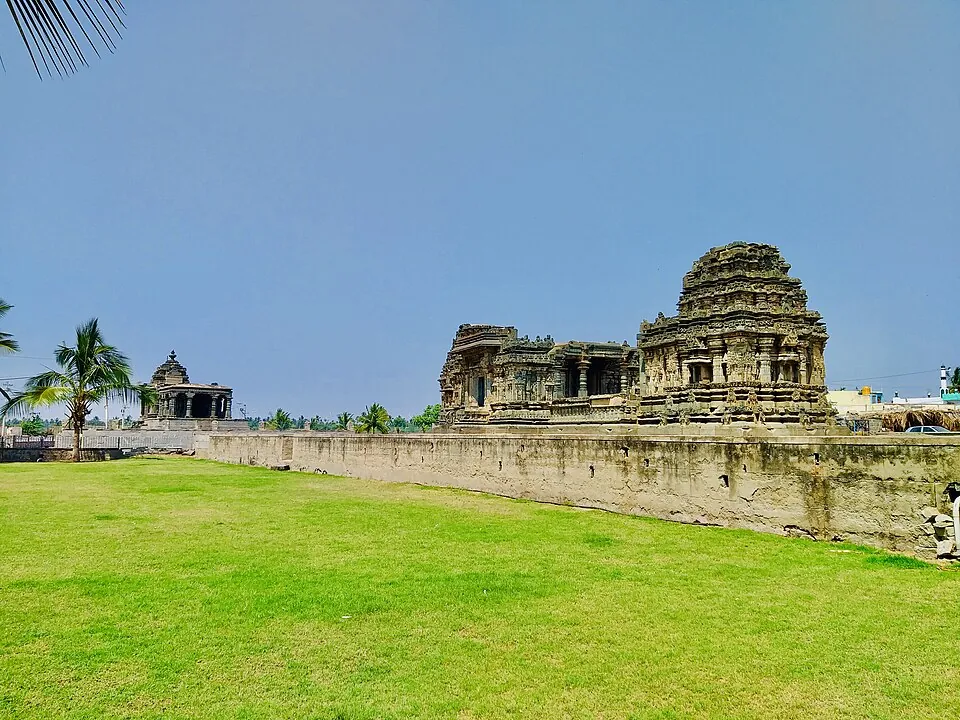
Kasivisvesvara Temple at Lakkundi
Kāśīviśveśvara Mandira, Lakkuṇḍi · ಕಾಶಿವಿಶ್ವೇಶ್ವರ ದೇವಸ್ಥಾನ, ಲಕ್ಕುಂಡಿ
The Kasivisvesvara temple at Lakkundi in Karnataka, built in the eleventh century, is regarded as a fine example of the mature Kalyāṇa Chalukya style. It has twin sanctums for Śiva and Sūrya and blends the northern, southern and Vesara traditions of temple building.
Lakkundi, a village in Gadag district of Karnataka about twelve kilometres from the town of Gadag, preserves one of the most admired temples of the later Chalukya age. The Kasivisvesvara shrine, also called Kashi Vishvanatha, is generally dated to the eleventh century and is often cited to show the Kalyāṇa Chalukya manner at its most developed. Its plan is unusual because two sanctums face one another across a shared pillared hall: the larger holds a Śiva linga, while the other is dedicated to Sūrya, the sun god. Visitors and scholars notice the lathe-turned pillars, the finely worked doorways and the tiny three-dimensional figures that crowd the walls. Art historian James Harle has drawn attention to a further point of interest, which is that the builders combined features from all three principal temple idioms, namely Nāgara, Vesara and Drāviḍa, within a single complex. Such blending reflects the position of the Deccan between northern and southern traditions. The temple stands on the route between Hampi and the Goan coast. The date given is approximate, since construction is assigned to the century rather than to a documented year.
Sources
- Kasivisvesvara Temple, Lakkundi Wikipedia · CC-BY-SA-4.0
- Q6374558 Wikidata · CC0-1.0