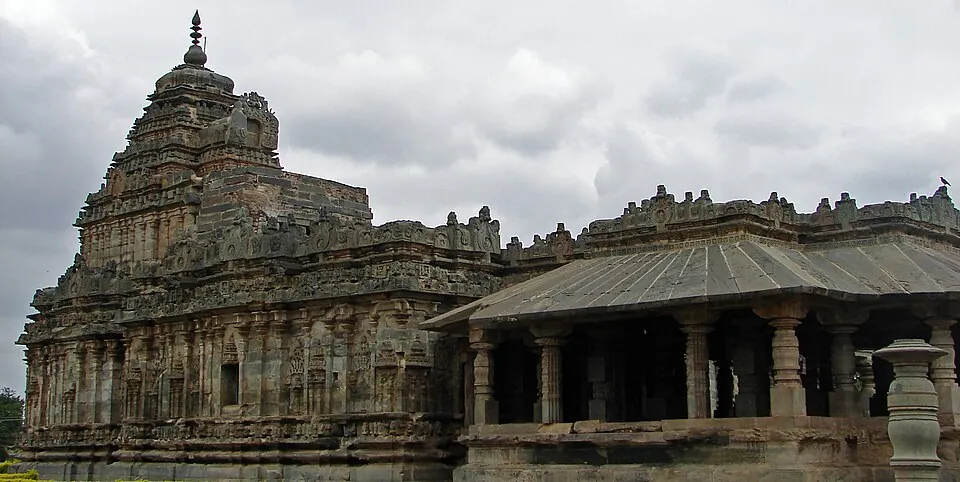
Lakkundi, the Temple Town of the Later Chalukyas
Lakkundi, now a village in Karnataka's Gadag district, was by the tenth century a busy commercial hub with its own mint. Its Hindu and Jain temples, stepwells and tanks give name to the so-called Lakkundi school of Kalyāṇa Chalukya architecture, studied closely today.
Lakkundi, once a major city and now a quiet village in the Gadag district of Karnataka, was already an important centre of trade by the tenth century, and it hosted a mint that served the wider south. Inscriptions in Kannada and Sanskrit mention the place, which by the twelfth century had accumulated many Hindu and Jain shrines together with practical works such as stepwells and reservoirs. The Brahma Jinālaya counts as the oldest of the great temples, while the Kāśīviśveśvara is usually singled out as the most refined and richly carved. Others include the Maṇikeśvara, Nannēśvara and Nīlakaṇṭheśvara shrines. As the town grew rich it served for a time as one of the Hoysala capitals. In the fourteenth century it was attacked by Sultanate forces, and more than fifty temples are now in ruins, though the principal monuments have been conserved by the Archaeological Survey of India. Art historians speak of a Lakkundi school of builders and sculptors, an important reference for understanding Kalyāṇa Chalukya temple design. Nineteenth-century British archaeologists helped bring the site to wider notice. The year 1000 marks its commercial flowering approximately.