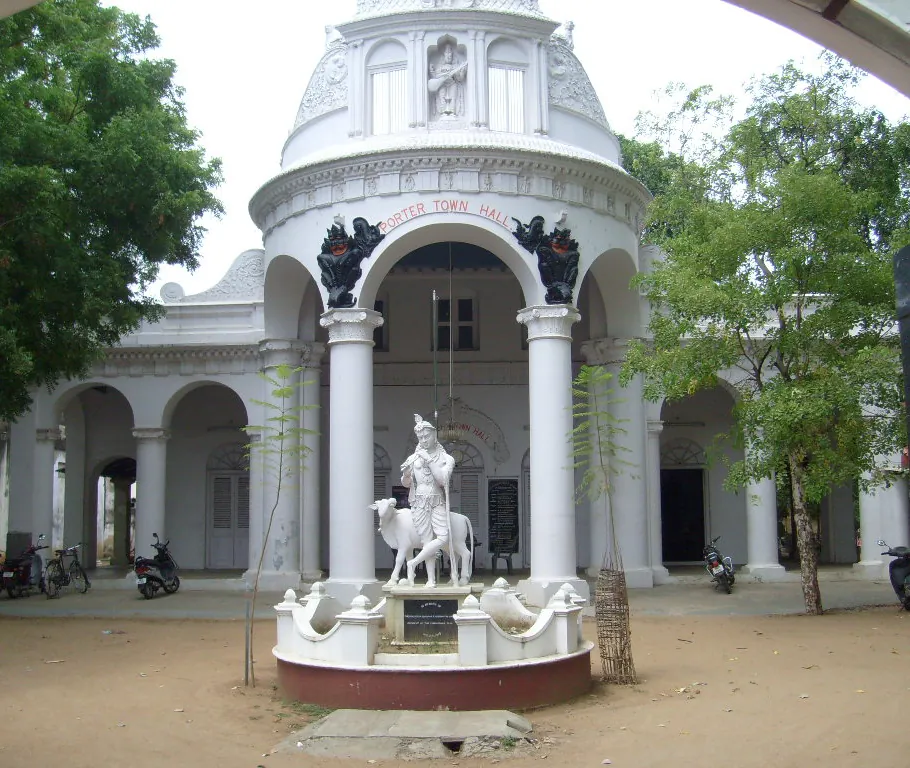
Kumbakonam, the Temple City of the Kaveri
Kumbhakoṇam · कुंभकोणम
Kumbakonam, in Thanjavur district, is called the temple city for its many Hindu shrines and for the Mahamaham festival held every twelve years. Located between the Kaveri and Arasalar rivers, it was ruled by the Cholas, Pallavas, Nayaks and Marathas, and during British rule became a noted centre of learning.
Kumbakonam, also known as Kudanthai, lies about forty kilometres from Thanjavur on the banks of the Kaveri, with the Arasalar river on its south. Its reputation as a temple city rests on the unusual number of Hindu shrines packed within it and on the Mahamaham festival, held once in twelve years, which brings pilgrims from across the country. Its past goes back to the Sangam period, and it was governed in turn by the early Cholas, the Pallavas, the Mutharaiyars, the medieval and later Cholas, the Pandyas, Vijayanagara, the Nayaks and the Thanjavur Marathas. In the seventh and eighth centuries it served as a seat of the Cholas. During British rule the town grew into a major base for both Hindu scholarship and Western-style education, and gained the nickname Cambridge of South India. It became a municipality in 1866. The year given here is only an approximate marker for the flowering of its temples under the Cholas.
Sources
- Kumbakonam Wikipedia · CC-BY-SA-4.0
- Q913399 Wikidata · CC0-1.0