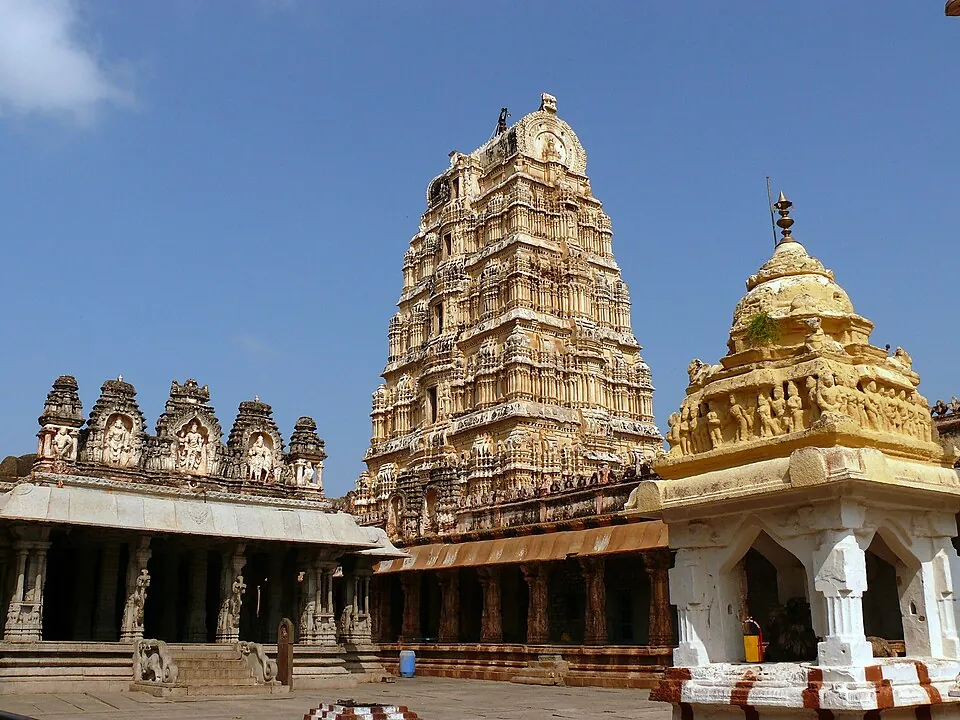
Virūpākṣa Temple, the Sacred Heart of Hampi
Virūpākṣa · विरूपाक्ष
The Virūpākṣa Temple at Hampi, on the Tungabhadrā river, is dedicated to Virūpākṣa, a form of Śiva, and is the main pilgrimage centre of the site. Its origins reach back to about the 7th century, and it was expanded under Deva Rāya II of Vijayanagara by the chieftain Lakkaṇa Daṇḍeśa.
The Virūpākṣa Temple is in Hampi, a place in Karnataka's Vijayanagara district, beside the Tungabhadrā river. It is dedicated to Virūpākṣa, a form of Śiva, and is considered the principal place of worship at Hampi, a role it has held for centuries. A shrine is thought to have existed on the spot from as early as the seventh century, long before the Vijayanagara capital. During the fifteenth century it was greatly enlarged by Lakkaṇa Daṇḍeśa, a nāyaka, or chieftain, serving the Vijayanagara ruler Deva Rāya II, also known as Prauḍha Deva Rāya. The temple belongs to the Group of Monuments at Hampi, a UNESCO World Heritage Site. Its tall gateway tower, columned halls and courtyards show the building styles of the empire, and it has remained a living sanctuary through the destruction of the city in 1565. The date used here is an approximate marker of the expansion under the Vijayanagara rulers, not of the original foundation, which cannot be fixed precisely.
Sources
- Virupaksha Temple, Hampi Wikipedia · CC-BY-SA-4.0
- Q2502406 Wikidata · CC0-1.0