Pulakeśin I Founds Vātāpi and Claims Sovereignty
Pulakeśin I · पुलकेशिन् प्रथम
Pulakeśin I, who reigned from about 543 to 566 CE, was the earliest sovereign king of the Chalukyas of Vātāpi, now Bādāmi. He founded the city and performed the Aśvamedha sacrifice to assert his imperial standing, laying a base for a dynasty that came to rule much of peninsular India.
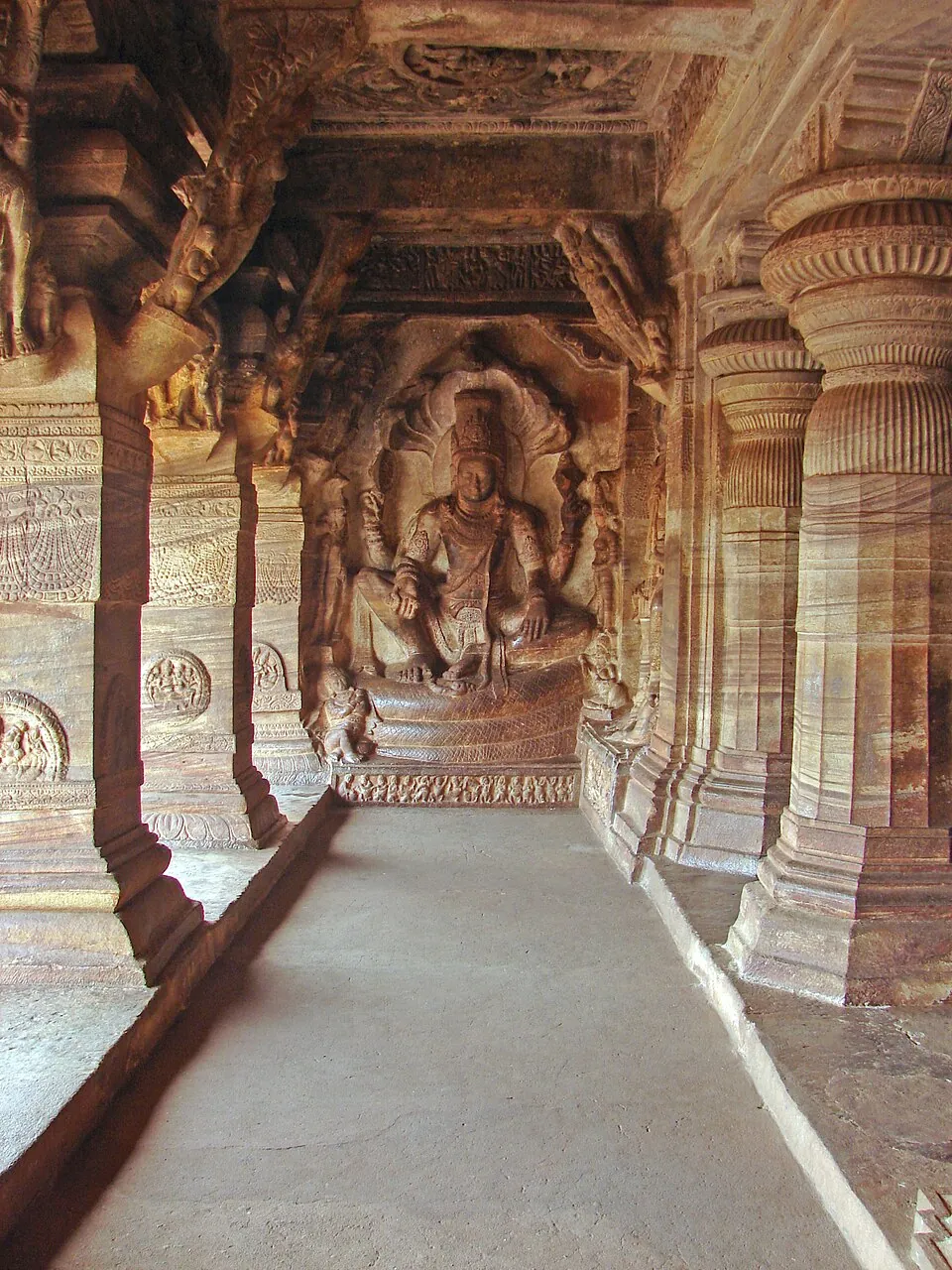
Pulakeśin, called the first of that name, is recognised as the first independent ruler of the Chalukya dynasty of Vātāpi, the present-day town of Bādāmi in Karnataka. He is dated to about 543 to 566 CE. His authority covered parts of present-day Maharashtra and Karnataka in the western Deccan. He is credited with establishing Vātāpi itself, a hilltop fortress city ringed by sandstone cliffs that became the dynasty's capital and later a centre of remarkable cave temples. To assert royal status he also performed the Aśvamedha, the horse sacrifice by which kings traditionally announced supreme sovereignty. In this he followed a long line of earlier rulers, among them the Gupta emperors, and by doing so declared that he owed allegiance to no superior. The kingdom he founded went on to rule a major share of peninsular India in the following generations, and his grandson Pulakeśin II became its most famous king, defeating the northern emperor Harṣa on the Narmadā. Because few records survive from his own lifetime, details of his reign are drawn mostly from later Chalukya inscriptions.
Sources
- Pulakeshin I Wikipedia · CC-BY-SA-4.0
- Q7259171 Wikidata · CC0-1.0