Chittorgarh Fort Falls to Alauddin Khalji
Cittauṛgaṛh · चित्तौड़गढ़
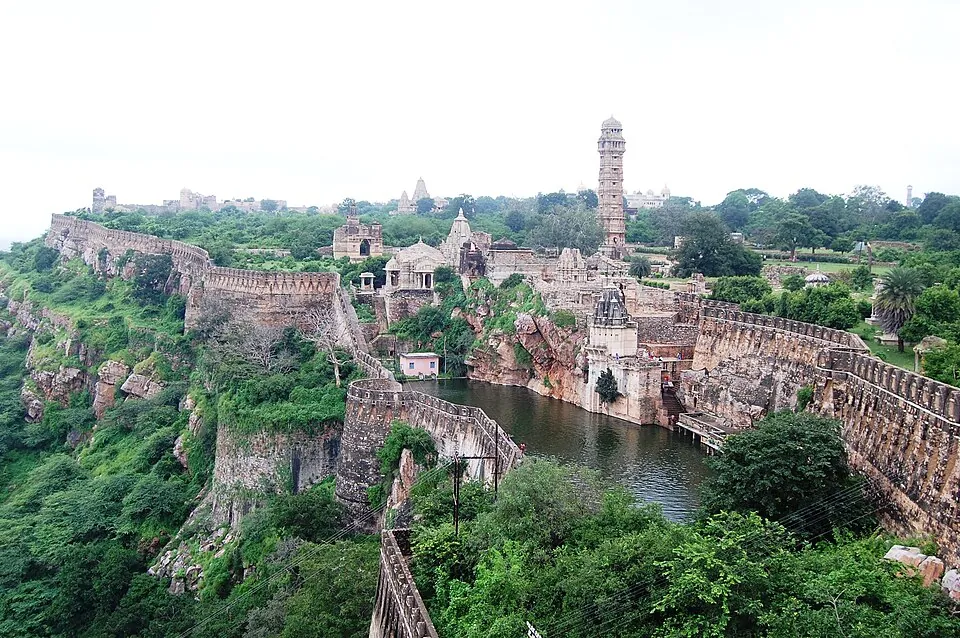
Chittorgarh, the capital of Mewar and one of India's largest forts, covers a 180-metre hill with palaces, temples and water tanks and is a UNESCO site. The Sultanate siege of 1303 under Alā-ud-Dīn Khaljī is the first of its famous assaults.
Chittor Fort, or Chittorgarh, was the capital of Mewar and is among the largest forts in India. It spreads across a hill about 180 metres high, covering some 280 hectares above the plain drained by the Berach river, and it holds some sixty-five historic structures including four palaces, nineteen large temples, twenty water bodies, four memorials and several victory towers. In 2013 the World Heritage Committee, meeting in Phnom Penh, inscribed it together with five other Rajasthan hill forts. The fort is remembered for the great sieges it endured. The first was in 1303, when Sultan Alā-ud-Dīn Khaljī of Delhi besieged and captured it from the Guhila ruler Ratnasiṃha; later assaults in 1535 and 1568 are also recalled in Rajput tradition, in which acts of jauhar and sacrifice form part of the memory of the place. Later narrative retellings, such as the Padmāvat of Malik Muhammad Jāyasī, added legendary detail to the 1303 events, so history and poetry should be read separately.
Sources
- Chittor Fort Wikipedia · CC-BY-SA-4.0
- Q3695769 Wikidata · CC0-1.0