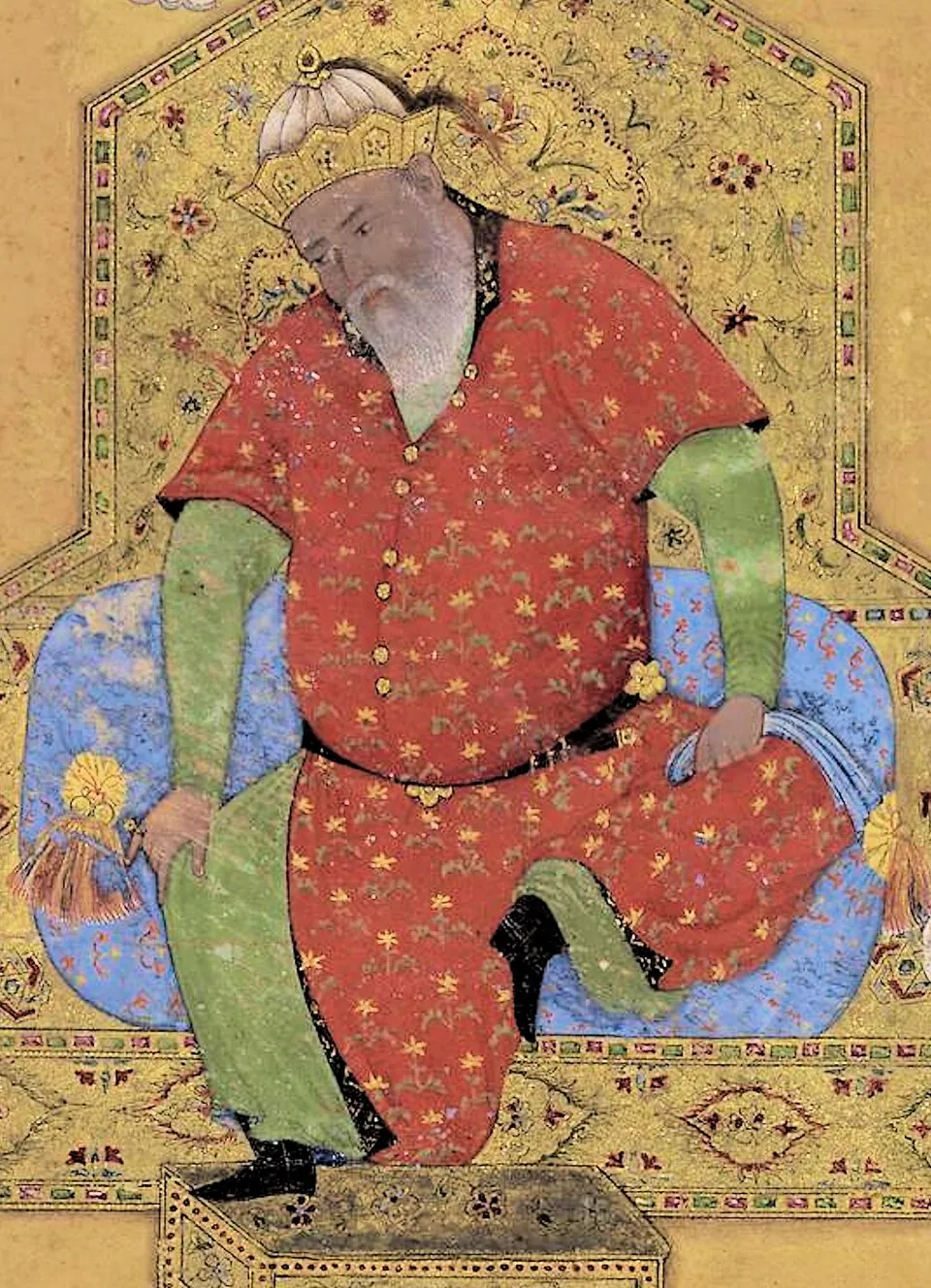
Jalāl-ud-Dīn Khaljī Founds the Khaljī Dynasty
Jalāl-ud-Dīn Khaljī, an officer of the Mamluk sultans, took power in Delhi in 1290 after serving as regent for a child sultan and then deposing him. He founded the Khaljī dynasty, which ruled the Delhi Sultanate until 1320, and reigned until his murder in 1296.
Jalāl-ud-Dīn Khaljī, born about 1220 and also called Fīrūz, began as an officer under the Mamluk dynasty of the Delhi Sultanate and reached high office under Sultan Muʿizz-ud-Dīn Qayqubād. When Qayqubād was paralysed, a faction of nobles appointed his infant son Shams-ud-Dīn Kayūmars as sultan and plotted to kill Jalāl-ud-Dīn. Instead, he had the plotters put to death and took over as regent. Within months he removed the child and made himself sultan in 1290, founding the Khaljī dynasty that governed the Delhi Sultanate until 1320. His reign was marked by a mild approach for the period, a reluctance to punish rebels harshly, and campaigns against Mongol incursions and neighbouring rulers. In 1296 he was assassinated by his nephew and son-in-law Alā-ud-Dīn Khaljī, who seized the throne and went on to expand the sultanate dramatically. The change from the Mamluk to the Khaljī line is often treated as a turning point, because it opened the sultanate to a wider range of nobles beyond the old Turkic ruling elite.
Sources
- Jalal-ud-Din Khalji Wikipedia · CC-BY-SA-4.0
- Q2691885 Wikidata · CC0-1.0