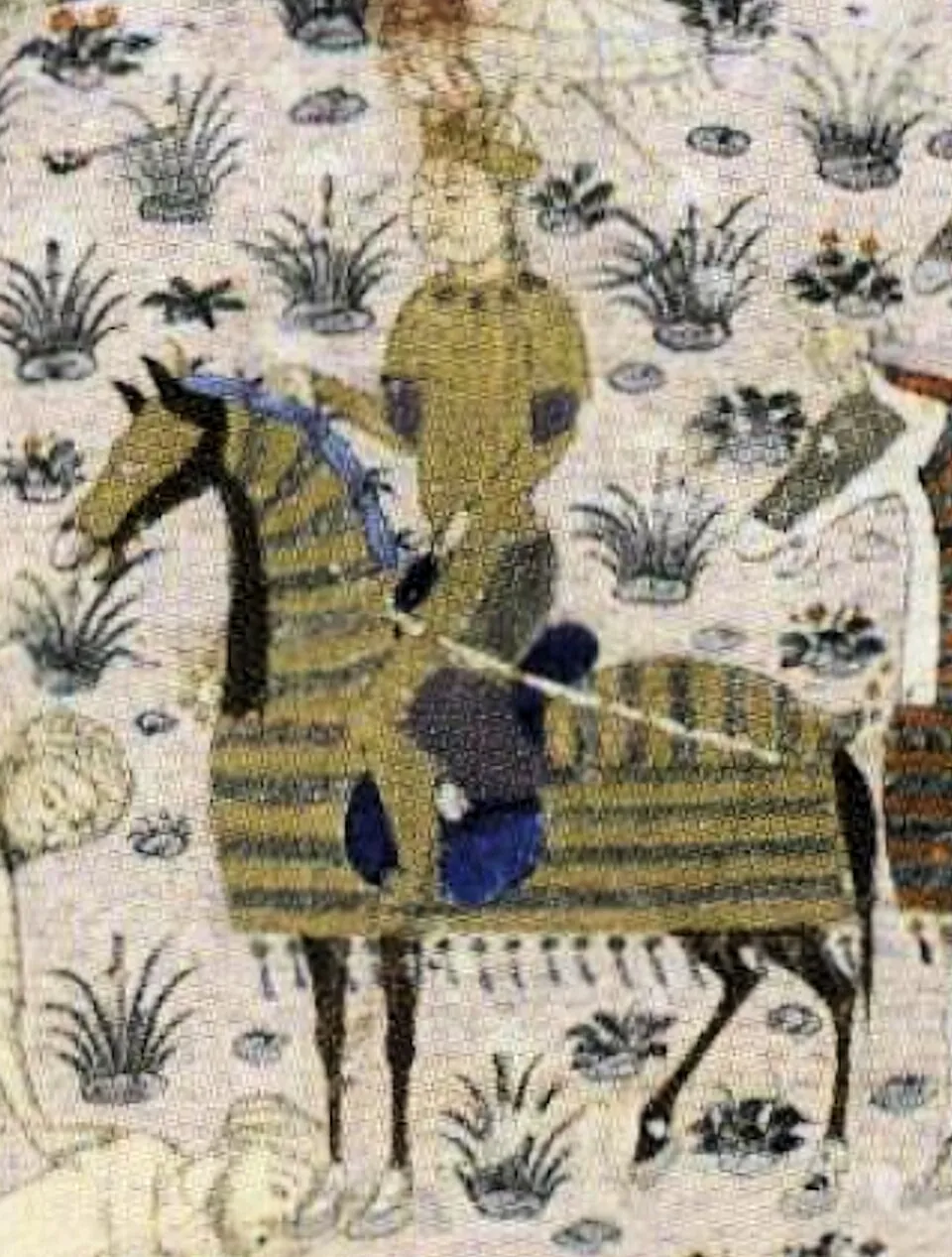
Ghiyāth al-Dīn Tughluq Founds the Tughluq Dynasty
Ghiyāth al-Dīn Tughluq · ग़ियासुद्दीन तुग़लक़
Ghiyāth al-Dīn Tughluq took the throne of Delhi in 1320 after the fall of Khusraw Khān, starting the Tughluq dynasty. He built the fortress city of Tughluqābād, extended Delhi's authority in the Deccan and Bengal, and died in 1325 when a pavilion collapsed over him at Afghānpur.
Ghiyāth al-Dīn Tughluq, a veteran military governor of the Delhi Sultanate, became sultan in 1320. He took power after the brief and turbulent reign of Khusraw Khān, who had overthrown the last Khaljī ruler, and so began the Tughluq dynasty. His rule was short but energetic. He restored order to the administration, encouraged agriculture and tax reforms, and kept his treasury on a sound footing. He had a new fortified capital built to the east of Delhi, called Tughluqābād, whose massive stone walls remain impressive ruins. His forces, commanded in part by his son Muḥammad, campaigned in the Deccan against the Kākatīyas of Warangal and brought Tirhut and Bengal under closer control. In 1325 the sultan was returning from the eastern campaign when a wooden pavilion built to welcome him at Afghānpur collapsed, killing him. Some contemporaries suspected foul play, but the cause is still debated. His son succeeded him as Muḥammad bin Tughluq, a ruler of far-reaching and controversial experiments. Ghiyāth al-Dīn's tomb at Tughluqābād stands as one of the early examples of the sloping, severe style of Tughluq architecture.
Sources
- Ghiyath al-Din Tughluq Wikipedia · CC-BY-SA-4.0
- Q1391172 Wikidata · CC0-1.0