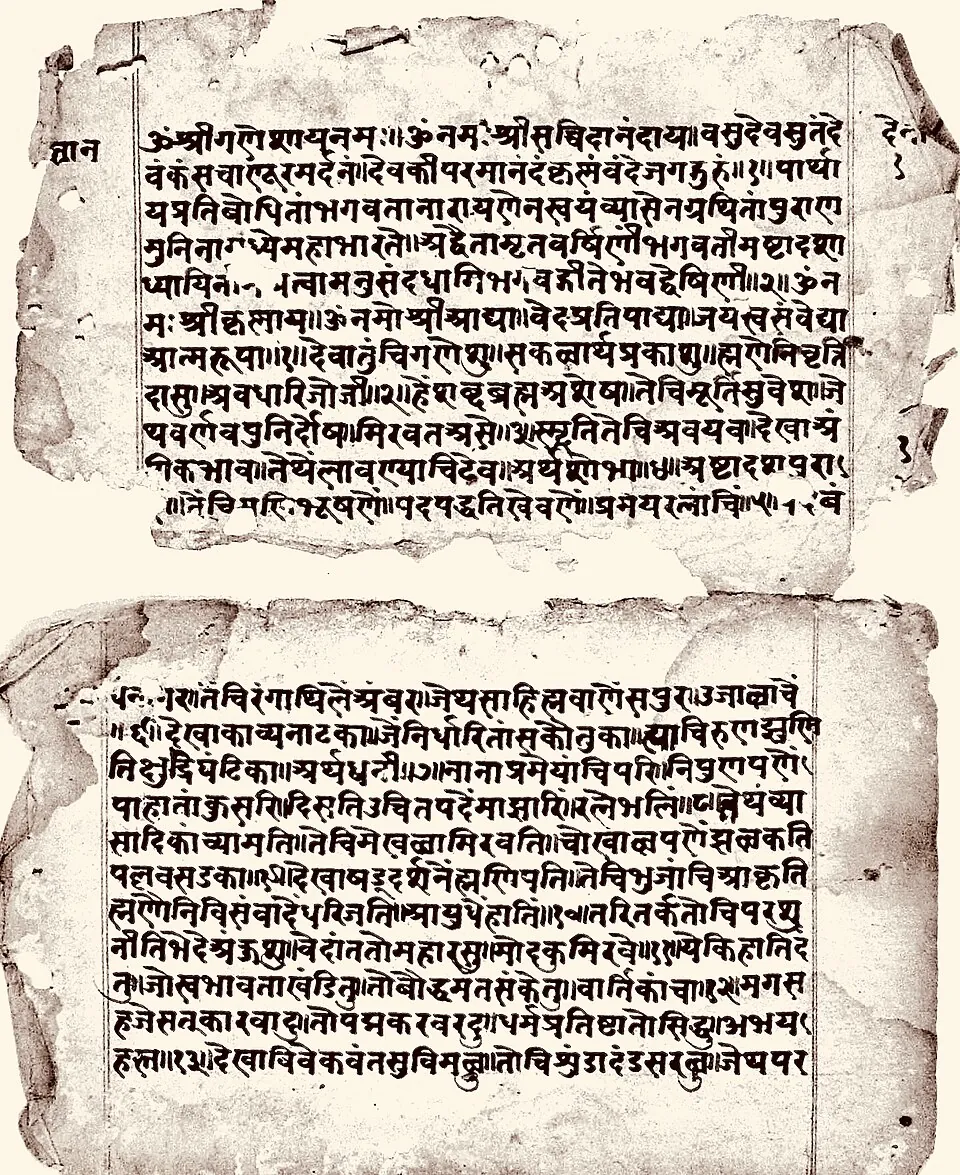
Dnyaneshwar Composes the Jnaneshwari in Marathi
Jñāneśvarī · ज्ञानेश्वरी
In 1290 CE the young saint-poet Dnyaneshwar completed his Marathi commentary on the Bhagavad Gita, known as the Jnaneshwari. It is the earliest surviving major work of Marathi literature and a foundation text for the Varkari devotional tradition of Maharashtra.
The Jnaneshwari, also called Bhavartha Deepika, is a verse commentary on the Bhagavad Gita written in Marathi by the saint Dnyaneshwar, who is remembered as having been only in his teens when he composed it. Dating it to 1290 CE rests on solid ground: the text refers to the Yadava king Ramadeva, and the colophon preserves the scribe's name and the year of completion in the Shaka reckoning. Contemporary poems by Namdev also mention the work. By choosing the language of ordinary people rather than Sanskrit, Dnyaneshwar opened the Gita's teaching to listeners who could not read the classical tongue. His interpretation follows the Advaita Vedanta line, yet it is full of vivid images and a devotional warmth that later shaped poets such as Eknath and Tukaram and the Varkari pilgrimage community that gathers around Vithoba of Pandharpur. The work is regarded as the oldest surviving literary text in Marathi. Questions about its purity arose because Eknath, in the sixteenth century, said he had restored the poem from corrupted copies, and scholars generally treat his edition as the most faithful one we have.
Sources
- Dnyaneshwari Wikipedia · CC-BY-SA-4.0
- Q2722359 Wikidata · CC0-1.0