Ganesh Chaturthi Becomes a Public Festival
Ganesh Chaturthi, long observed in homes, grew into a large community festival in Maharashtra in the 1890s. Bal Gangadhar Tilak is widely credited with promoting public Ganesha installations from 1893, though Pune neighbourhood groups had begun public celebrations a year earlier. Pandals, processions and immersions became a shared civic ritual under colonial rule.
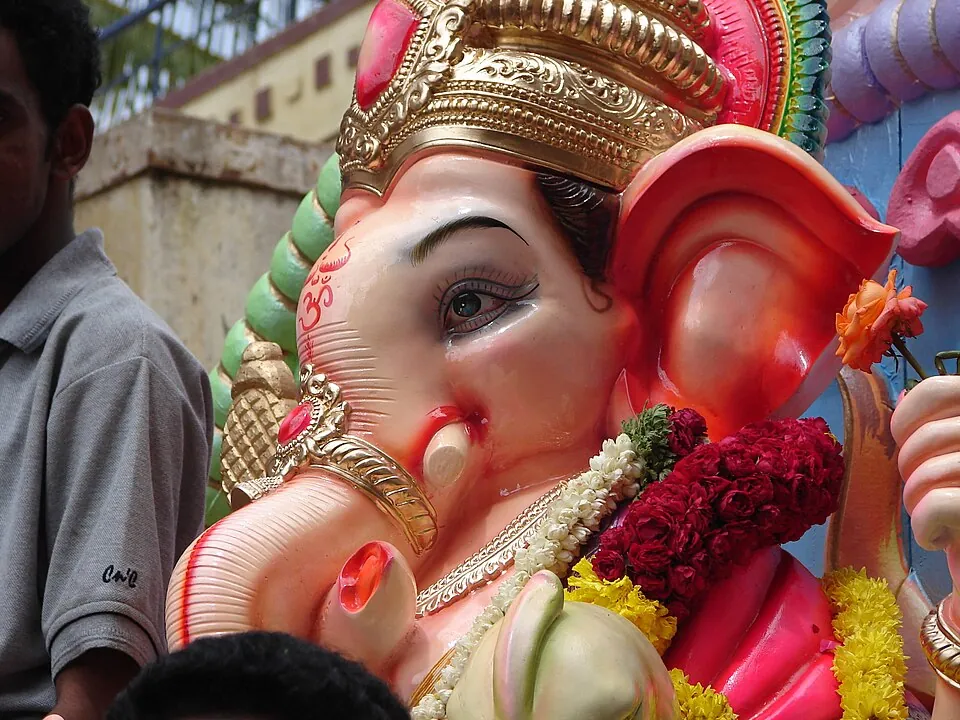
Ganesh Chaturthi honours the elephant-headed deity Ganesha with household worship, fasting, hymns and offerings of sweets such as modak. For centuries it was largely a private or local affair. In the early 1890s public celebrations took shape in Pune, with neighbourhood groups setting up shared images in 1892, and in 1893 the nationalist leader Bal Gangadhar Tilak championed the idea through his newspaper and speeches, so that he is widely credited with turning it into a public festival. Communities were encouraged to place Ganesha images on elaborate pandals and bring them out in processions. The events offered a platform where people of different castes could gather and where songs, speeches and plays could carry social and political messages despite colonial restrictions on assembly. The festival lasts ten days, ending with a procession and immersion of the image in a river or the sea on Ananta Chaturdashi; in Mumbai alone some 150,000 images are immersed each year. The change is best understood as a historical development of an older devotional practice, with 1893 marking the start of the large-scale public form.
Sources
- Ganesh Chaturthi Wikipedia · CC-BY-SA-4.0
- Q929250 Wikidata · CC0-1.0