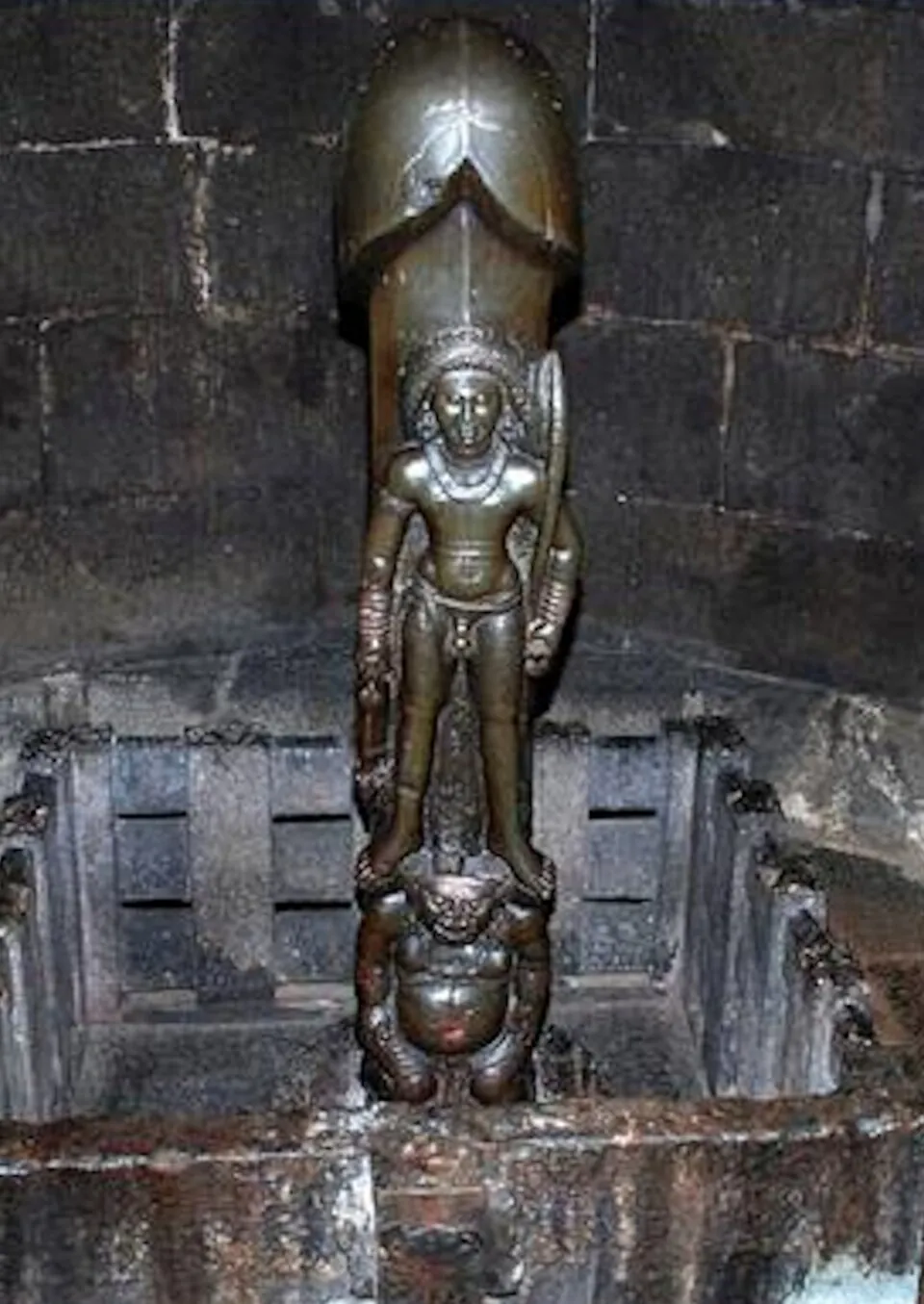
The Gudimallam Liṅga and Its Early Image of Śiva
Guḍimallam Liṅga · गुडिमल्लम लिंग
Highly disputed; proposed dates run from the 3rd century BCE to the 4th century CE.
The Gudimallam Liṅga, in the Paraśurāmeśvara temple near Tirupati in Andhra Pradesh, is a very early liṅga with a standing figure of Śiva carved in relief on its front. Its date is disputed, ranging from the third century BCE to the early centuries CE.
In the village of Gudimallam, about 24 kilometres south-east of Tirupati, the sanctum of the Paraśurāmeśvara temple holds one of the most unusual sculptures of ancient India. This is a liṅga of strongly realistic form, with a full-length standing figure of Śiva carved in relief on the front. It is regarded as perhaps the second earliest liṅga associated with Śiva yet found. Estimates for its date vary widely, from the third century BCE or the second to first century BCE through to the second century CE and the third or fourth century CE. The art historian J. C. Harle called it the only important sculpture to survive from early South India before the Pallava works of the seventh century, and noted that nothing similar exists for hundreds of miles around. If the early dates are right, the figure is one of the earliest unambiguous images of Śiva. The present temple building is later, usually put in the late Chola and Vijayanagara eras, so it may be a thousand years younger than the liṅga and appears to have replaced earlier structures. The liṅga may once have stood in the open, within the rectangular stone surround that remains. The temple is still in worship and has come under the protection of the Archaeological Survey of India since 1954.
Sources
- Gudimallam Lingam Wikipedia · CC-BY-SA-4.0
- Q17284854 Wikidata · CC0-1.0