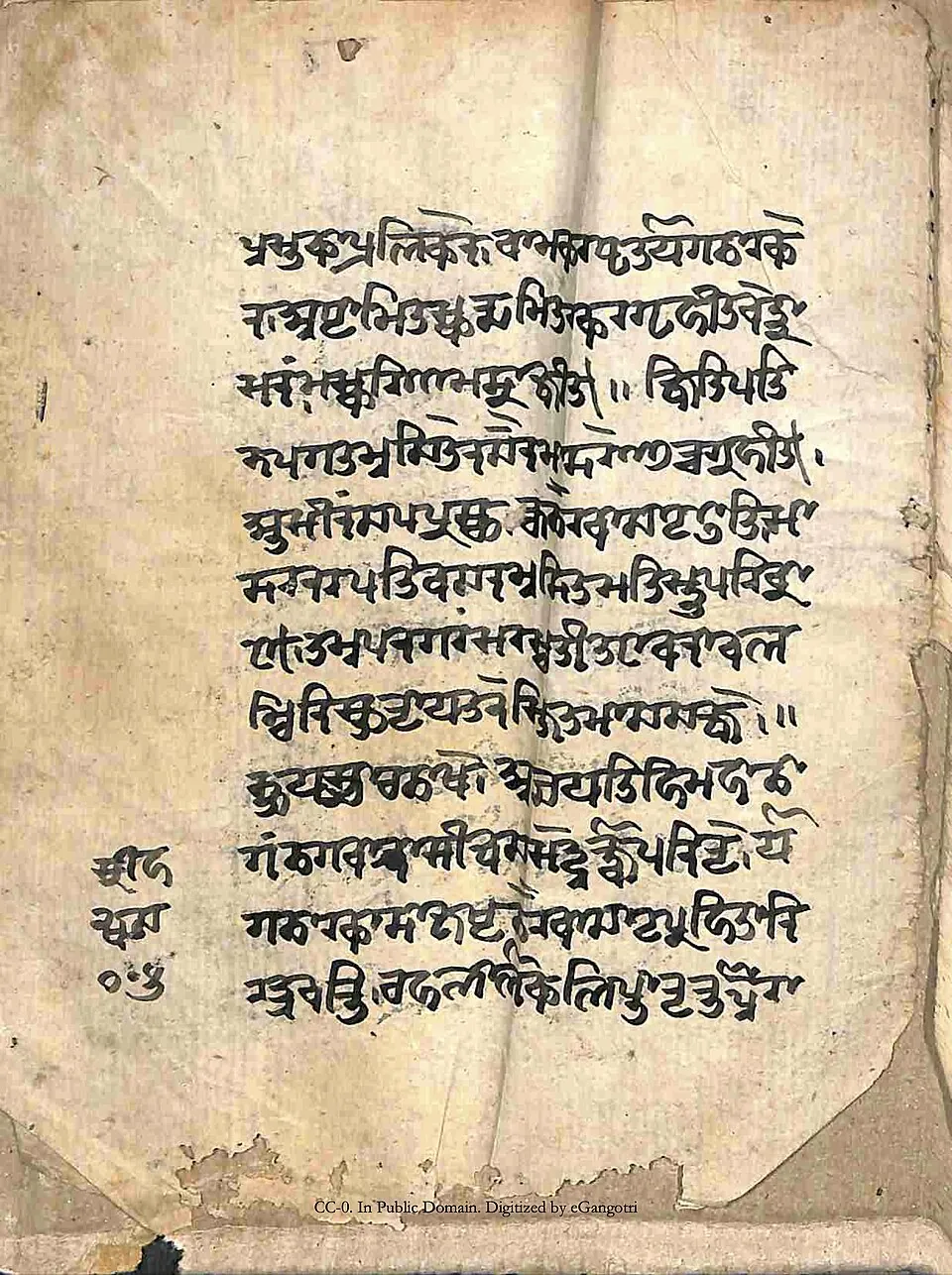
Bāṇa Writes the Harṣacarita
Harṣacarita · हर्षचरित
Bāṇabhaṭṭa, court poet of Harṣa, composed the Harṣacarita in the early seventh century as a biography of his patron. Written in elaborate Sanskrit prose, it is often seen as the start of historical writing in literary form in the language.
The Harṣacarita, whose title means the deeds of Harṣa, is a prose biography of the northern Indian emperor Harṣavardhana, written by his court poet Bāṇabhaṭṭa in the early seventh century. It was the poet's first major work, ahead of the romance Kādambarī. Bāṇa opens with his own family and youth, then describes how Harṣa's family rose and how he took the throne of Kanyakubja after personal tragedies. The style is dense and ornamental, full of long compounds and elaborate images, yet the book carries valuable information about royal courts, village life and religious currents of the period. Because it names real rulers and events, historians use it, with caution about its flattering tone, as evidence for early medieval northern India. Literary scholars see it as the first Sanskrit attempt to treat the life of a contemporary king as the subject of a sustained narrative rather than of mythology. The date here is approximate and reflects the reign of Harṣa, about 606 to 647.
Sources
- Harshacharita Wikipedia · CC-BY-SA-4.0
- Q1810426 Wikidata · CC0-1.0