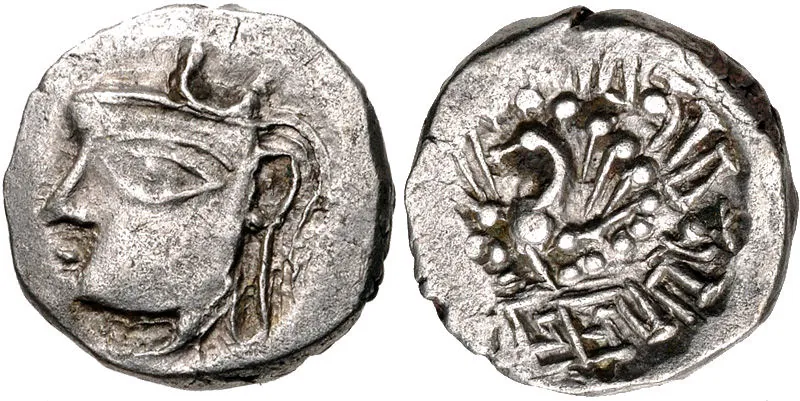
Pushyabhūti Dynasty of Thanesar
Puṣyabhūti · पुष्यभूति
The Puṣyabhūti, or Vardhana, dynasty ruled Thanesar in northern India during the sixth and seventh centuries. It reached its height under Harṣavardhana, whose realm covered much of the north and northwest, from Kāmarūpa in the east to the Narmada in the south. He later moved his capital from Sthāṇvīśvara to Kanyakubja.
The Puṣyabhūti dynasty, also known as the Vardhana dynasty, governed the kingdom of Thanesar, ancient Sthāṇvīśvara, in present-day Haryana. It emerged in the period after the Gupta decline and held local rule through the sixth and into the seventh century. The family's best-known figure was its last ruler, Harṣavardhana, who lived from about 590 to about 647 CE. Under him the realm grew into a large empire that covered most of north and northwestern India, reaching Kāmarūpa on the east and the Narmada river on the south. Harṣa eventually shifted his seat to Kanyakubja, modern Kannauj in Uttar Pradesh, and ruled from that city until his death. Because no obvious successor continued the dynasty, the empire fragmented soon after 647. The date used here, 590, is an approximate marker for the dynasty's rise towards imperial status, since its early history is documented less well than the reign of Harṣa.
Sources
- Pushyabhuti dynasty Wikipedia · CC-BY-SA-4.0
- Q28109312 Wikidata · CC0-1.0