Hauz Khas: Reservoir, Madrasa and Tomb in Delhi
Hauz Khāṣ · हौज़ ख़ास
Hauz Khas in South Delhi grew around a large reservoir first built by Alāʾ al-Dīn Khaljī for the city of Sīrī and restored under Fīrūz Shāh Tughluq. The sultan added a madrasa, mosque and his own tomb, and the site later became a fashionable urban neighbourhood.
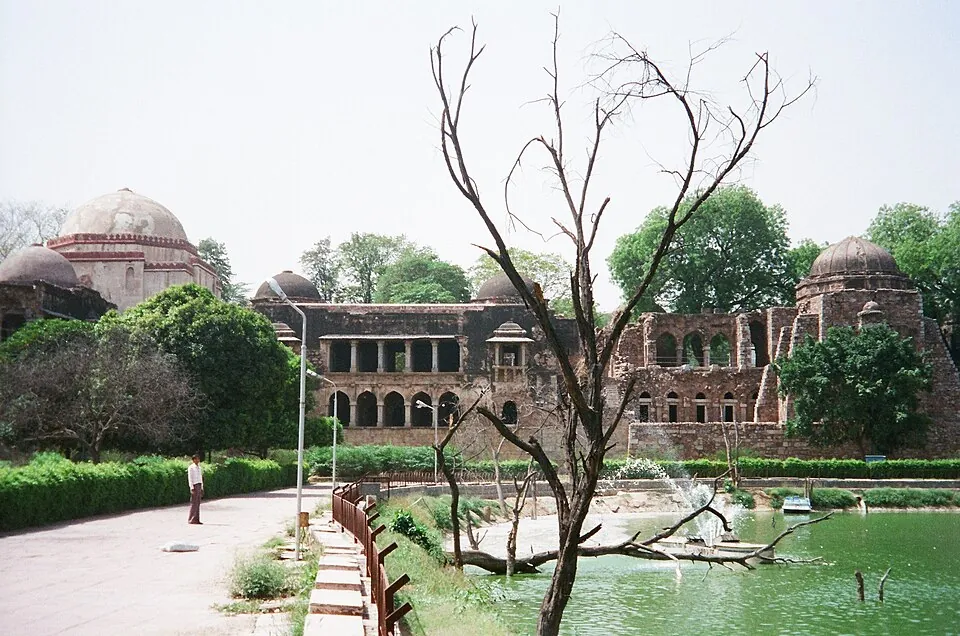
The Hauz Khas complex in South Delhi combines a water tank, a seminary, a mosque, a tomb and pavilions around an old village with medieval roots. It belonged to Sīrī, the second city of the Delhi Sultanate, which Alāʾ al-Dīn Khaljī (r. 1296 to 1316) founded. A plaque at the site credits Alāʾ al-Dīn with digging the large reservoir to supply the city's people with water. During the reign of Fīrūz Shāh Tughluq, from 1351 to 1388, the tank was cleared of silt, and a series of buildings, including a mosque and a madrasa, were raised along its banks and overlooking the water. Fīrūz Shāh's tomb stands at the angle of the L-shaped building, from which the reservoir can be seen. The surrounding village contains domed tombs of Muslim nobility from the fourteenth to sixteenth centuries. In the 1980s the neighbourhood was redeveloped into an affluent residential and commercial district, and today it is a popular destination with galleries, boutiques and cafés. The date used here marks the period of Fīrūz Shāh's works, in the mid-fourteenth century.
Sources
- Hauz Khas Complex Wikipedia · CC-BY-SA-4.0
- Q4496635 Wikidata · CC0-1.0