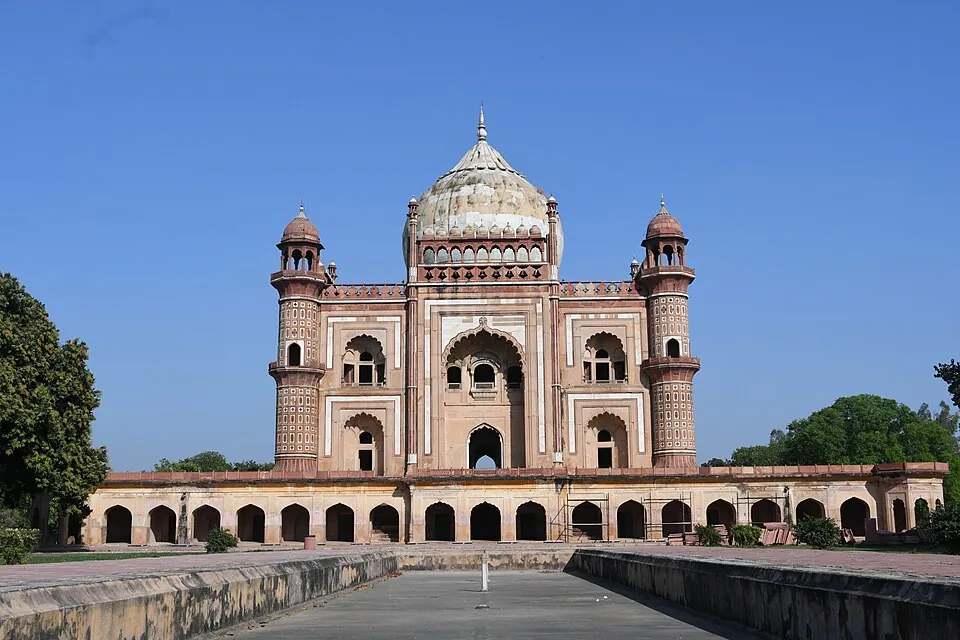
The Tomb of Safdarjung, a Late Mughal Mausoleum
The sandstone and marble tomb of Safdarjung in Delhi was built in 1754 for the Nawab of Awadh and Mughal prime minister. A late example of the imperial tomb-garden type, with eight rooms around the central chamber, it was the first such complex built by someone outside the ruling family.
The Tomb of Safdarjung is a mausoleum of sandstone and marble in Delhi, built in 1754 in the late Mughal style for Nawab Safdarjung. He was the Nawab of Awadh and served as prime minister, or Wazīr, of the Mughal Empire once Aḥmad Shāh Bahādur became emperor in 1748. The tomb follows the pattern of earlier imperial tombs such as the Taj Mahal, with a central chamber ringed by eight rooms in the hasht bihisht, or eight paradises, plan, and stands in a garden divided into four parts. It was the first time a person from outside the immediate imperial family built himself such a tomb and garden complex, which reflects how much the emperor's power had declined by the mid eighteenth century. Critics and admirers alike see in the building the last major monument of the Mughal tomb tradition, with ornamental details that are more exuberant and less refined than those of earlier works. It remains a protected monument and a public park in the capital.
Sources
- Tomb of Safdar Jang Wikipedia · CC-BY-SA-4.0
- Q375624 Wikidata · CC0-1.0