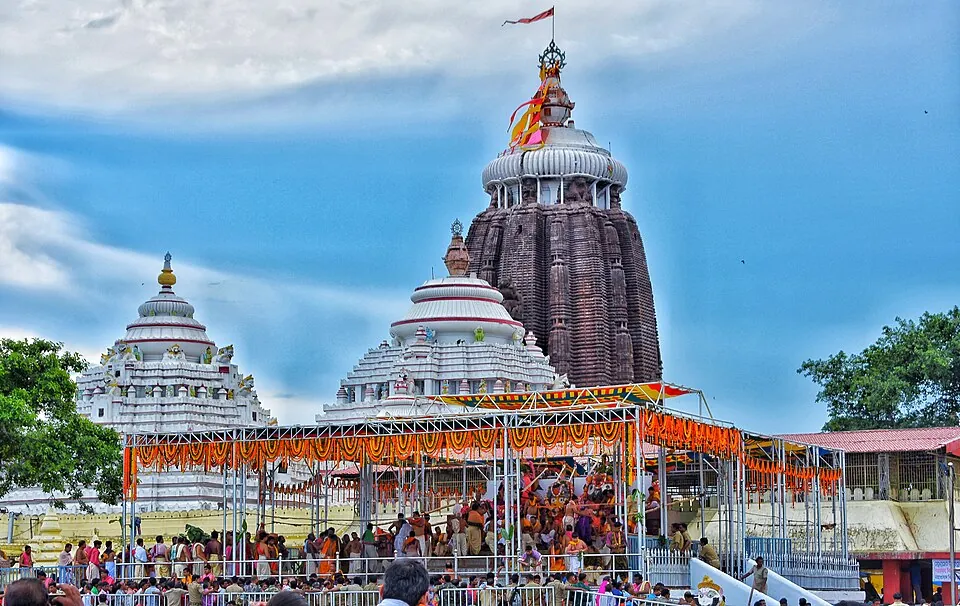
Chodagangadeva Begins the Great Jagannath Temple at Puri
Jagannātha Mandira, Purī · जगन्नाथ मंदिर, पुरी
The present Jagannath Temple at Puri, on Odisha's coast, was begun in the early twelfth century under Anantavarman Chodaganga of the Eastern Ganga dynasty. It houses wooden images of Jagannath, Balabhadra and Subhadra and is renowned for the annual Ratha Yatra chariot festival.
Temple records attribute the original main shrine at Puri to the legendary king Indradyumna of Avanti, but the surviving complex was rebuilt from the eleventh century onward, and the work is credited to Anantavarman Chodaganga, founder-king of the Eastern Gangas. The date used here marks that major rebuilding. The deity is Jagannath, a form of Vishnu, worshipped together with his brother Balabhadra and sister Subhadra. Unlike the stone or metal icons of most temples, the images are carved from neem wood and are ritually replaced in the nabakalebar ceremony every twelve or nineteen years. Local legend connects the cult to Nilamadhava, a deity worshipped by tribal communities, and the hereditary servitors called daitapatis claim tribal descent, which points to a long blending of forest and temple traditions. The Ratha Yatra, when the three deities are drawn on towering decorated chariots, is among the best-known festivals in India. The temple is also one of the four Char Dham pilgrimage sites, and it is sacred to the Vaishnava community and to many other Hindus. Its history thus joins tradition, royal patronage and tribal heritage.
Sources
- Jagannath Temple, Puri Wikipedia · CC-BY-SA-4.0
- Q1678260 Wikidata · CC0-1.0