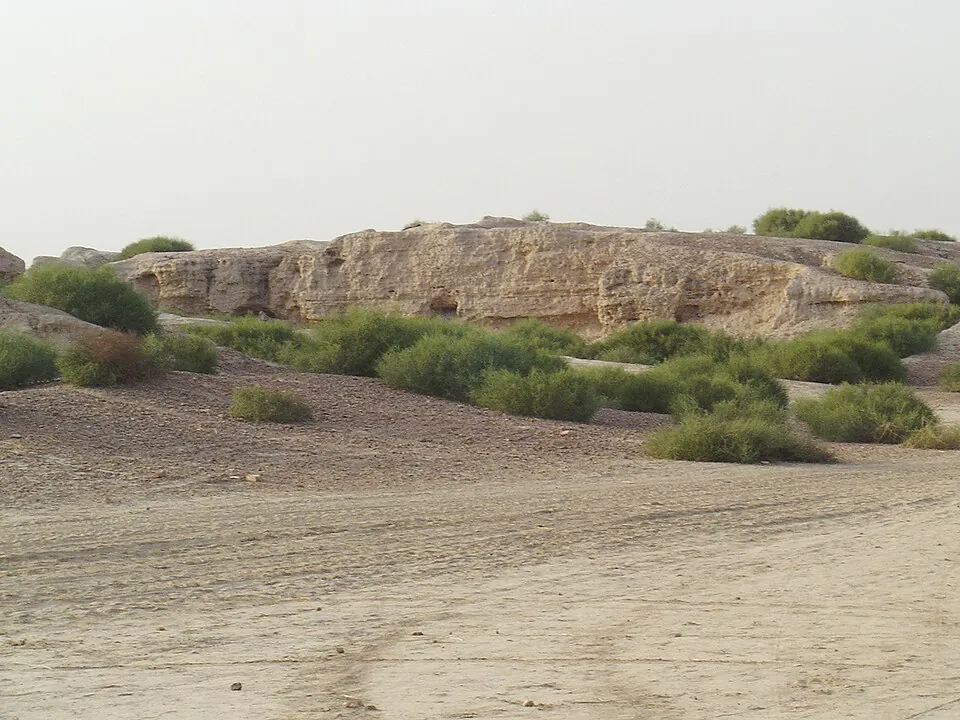
Kalibangan, Fire Altars and an Ancient Ploughed Field
Kalibangan, on the Ghaggar-Hakra in Rajasthan, was a major provincial centre of the Indus Valley Civilisation. Excavated by the Archaeological Survey of India from 1960 to 1969, it is known for its fire altars and for what is described as the earliest attested ploughed field. A planned town emerged there around 2900 BCE.
Kalibangan lies on the banks of the Ghaggar in Hanumangarh district, Rajasthan. The Italian scholar Luigi Tessitori first recognised that the mounds there held a prehistoric, pre-Mauryan culture, later understood as part of the Indus Valley Civilisation. The Archaeological Survey of India dug the site under Braj Basi Lal between 1960 and 1969, assisted by colleagues including B. K. Thapar and M. D. Khare, and the full report finally appeared in 2003. Its conclusion was that Kalibangan served as a major provincial capital of the civilisation. The place is especially noted for its row of fire altars and for a field showing furrow marks, described as the earliest attested ploughed field in the world. Around 2900 BCE the settlement grew into a planned town, with ordered streets and separate sections. Because dates for early Indus phases rest on archaeological dating rather than inscriptions, the date given here is approximate and may be refined by later work.
Sources
- Kalibangan Wikipedia · CC-BY-SA-4.0
- Q1722226 Wikidata · CC0-1.0