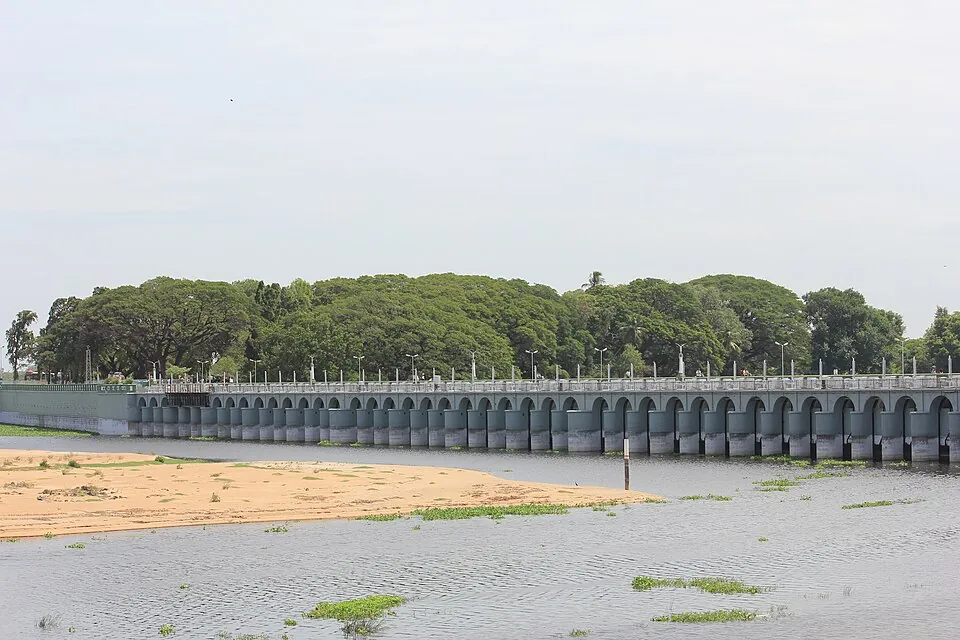
Kallanai, the Grand Anicut on the Kāveri
Kallaṇai
Kallanai, or the Grand Anicut, is a stone weir across the Kāveri in Tamil Nadu, traditionally attributed to the Cōḻa king Karikāla around 150 CE. It has diverted river water for irrigation for nearly two millennia and is still in use.
Kallanai, meaning 'stone dam' and sometimes called the Grand Anicut, spans the Kāveri river in the stretch between Tiruchirappalli and Thanjavur districts of Tamil Nadu. Tradition credits its construction to the early Cōḻa ruler Karikāla, and an approximate date of 150 CE is usually offered, though the evidence for the exact century is limited. The structure was built in flowing water, a feat of engineering that used large stones set in the riverbed, and it directs the Kāveri's flood into channels feeding the delta. It is often described as the oldest water-regulation structure in India that is still working, and it ranks among the oldest in the world. In the nineteenth century the British engineer Arthur Cotton studied it and later added modern improvements on the same principle, a debt he acknowledged. The dam made the Thanjavur delta one of India's most productive rice regions, and it underpinned the wealth of later Tamil kingdoms. Its long history illustrates the importance of hydraulic knowledge in South Asian agricultural life.
Sources
- Kallanai Dam Wikipedia · CC-BY-SA-4.0
- Q3534498 Wikidata · CC0-1.0