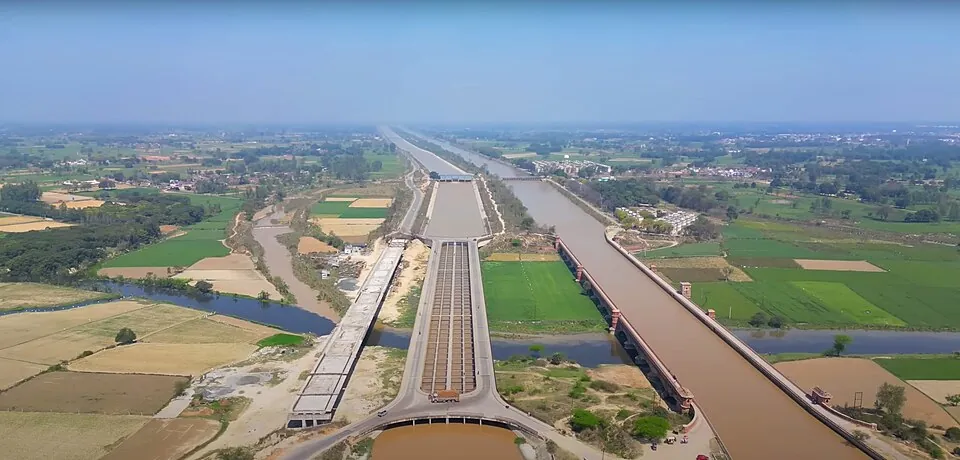
The Ganges Canal Brings Water to the Doab
The Ganges Canal, built between 1842 and 1854, irrigates the Doab between the Ganges and Yamuna. Its main line runs 272 miles with about 4,000 miles of distributaries, and later enlargements raised its head discharge to 10,500 cubic feet per second.
The Ganga Canal is an irrigation system serving the Doab, the fertile land lying between the Ganges and Yamuna rivers in northern India. It was constructed from 1842 to 1854 under the engineer Proby Cautley, and it was opened formally in April 1854, after a famine in 1837 and 1838 had shown how vulnerable the region was. Although its main purpose was irrigation, parts of the system were also used for navigation, mostly to carry building materials, and separate channels with lock gates let boats pass the falls. The original design drew about 6,000 cubic feet of water a second from the river at its head, and later improvements raised the discharge to 10,500 cubic feet per second. The system consists of a main canal of 272 miles and distribution channels totalling about 4,000 miles. It irrigates close to nine thousand square kilometres. The canal was one of the largest works of its kind in the world when built, and it has stirred discussion about colonial engineering, its benefits for farming and its costs such as waterlogging. It also stood at the head of a later network of Indian canals.
Sources
- Ganges Canal Wikipedia · CC-BY-SA-4.0
- Q2671536 Wikidata · CC0-1.0