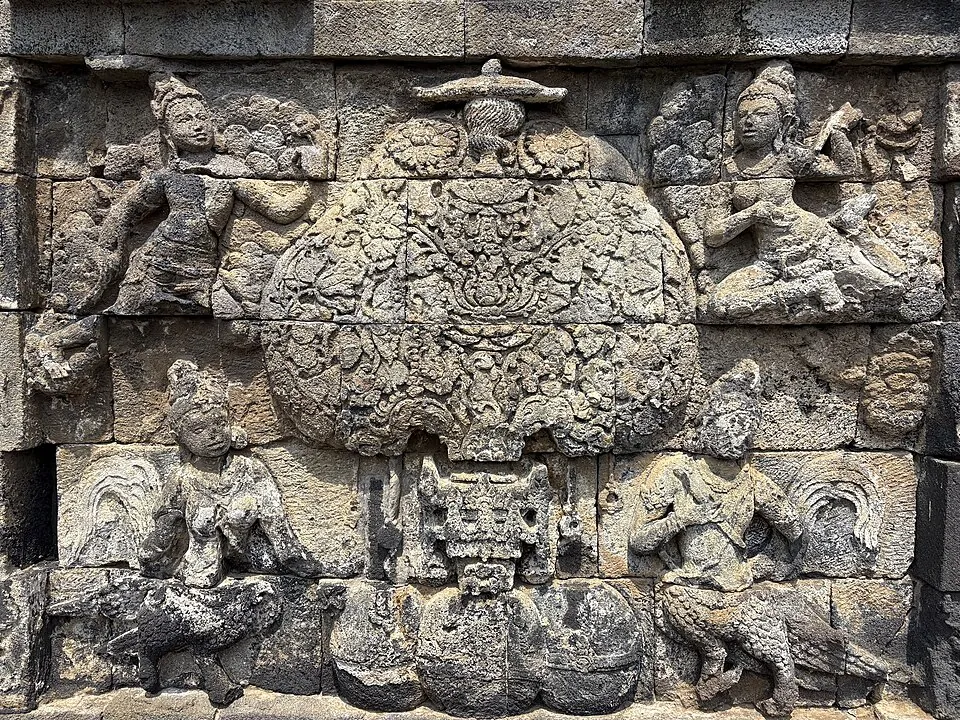
Kalpavṛkṣa, the Wish-Fulfilling Tree of the Samudra Manthana
Kalpavṛkṣa · कल्पवृक्ष
Symbolic placement on puranic cosmic reckoning; sacred narrative, not dated history.
In the Purāṇic account of the churning of the ocean, the wish-granting Kalpavṛkṣa arises with Kāmadhenu and is carried to Indra's paradise. The tree also figures in Jain and Buddhist cosmology; its date belongs to sacred time, not to history.
The Kalpavṛkṣa, the tree of the aeon, is a divine wish-fulfilling tree known in Hindu, Jain and Buddhist traditions. In Buddhism the term ratnavṛkṣa, jewelled tree, is also used. Descriptions appear early in Sanskrit literature, and the tree is a recurring theme in Jain cosmology. In Hindu narrative it is said to arise during the Samudra Manthana, the churning of the ocean, together with the divine cow Kāmadhenu, to supply every need. Indra, king of the gods, then carried it to his heaven. Over time the Kalpavṛkṣa has been identified with a number of real trees, among them the pārijāta, the banyan, acacia, mahua, the khejri, the butter tree and the mulberry, and it is celebrated widely in sculpture and poetry as an image of abundance. The year attached to this entry follows a traditional puranic scale of cosmic time and is symbolic; it carries no historical meaning. The tree belongs to the sacred narrative of the Purāṇas and to the shared imagery of Indian religions, in which it symbolises generosity and the fulfilment of desire.
Sources
- Kalpavriksha Wikipedia · CC-BY-SA-4.0
- Q2669314 Wikidata · CC0-1.0