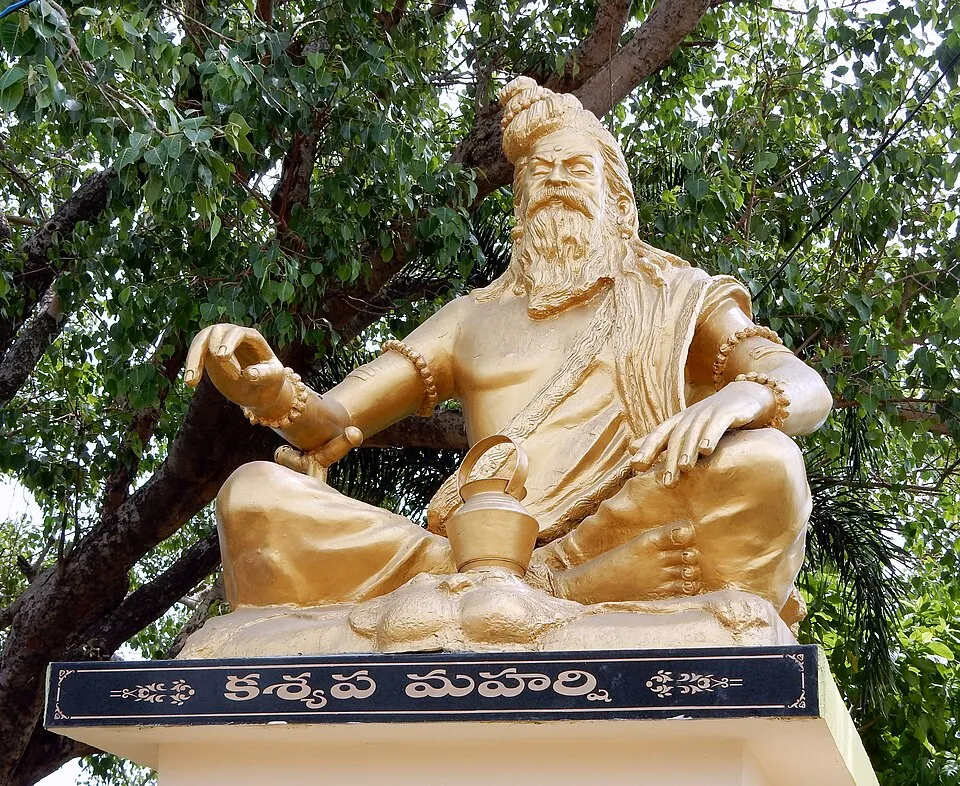
Kāśyapa Saṃhitā, an Ayurvedic Treatise on Childhood
Kāśyapa Saṃhitā · कश्यप संहिता
The Kāśyapa Saṃhitā, also called Vṛddha Jīvakīya Tantra, is an Ayurvedic treatise attributed to the sage Kāśyapa and counted among the earliest works of Indian medicine. It is especially consulted in paediatrics, gynaecology and obstetrics, and was translated into Chinese in the Middle Ages.
The Kāśyapa Saṃhitā, also known as the Vṛddha Jīvakīya Tantra, is a medical treatise attributed to the sage Kāśyapa. It is often listed alongside the Suśruta, Caraka, Bhela and Hārīta collections as one of the earliest Ayurvedic works, although it appears to depend on the earlier teaching of Caraka. The surviving text has 200 chapters grouped into sections. Thirty chapters cover general principles, eight each cover diagnosis, the body and the way of examining a patient, twelve deal with the senses, thirty with treatment, twelve with success in therapy and twelve with pharmaceutical preparations, and a supplementary part holds eighty more. Today the Saṃhitā is consulted especially in the branch called Kaumārabhṛtya, which covers the care of infants and children, as well as in gynaecology and obstetrics, and it forms part of Ayurvedic teaching syllabuses. The work was also translated into Chinese during the Middle Ages, which shows how widely Indian medical knowledge travelled. The date assigned here, around the sixth century CE, is a scholarly approximation, since the text was transmitted with variations.
Sources
- Kashyapa Samhita Wikipedia · CC-BY-SA-4.0
- Q3183667 Wikidata · CC0-1.0