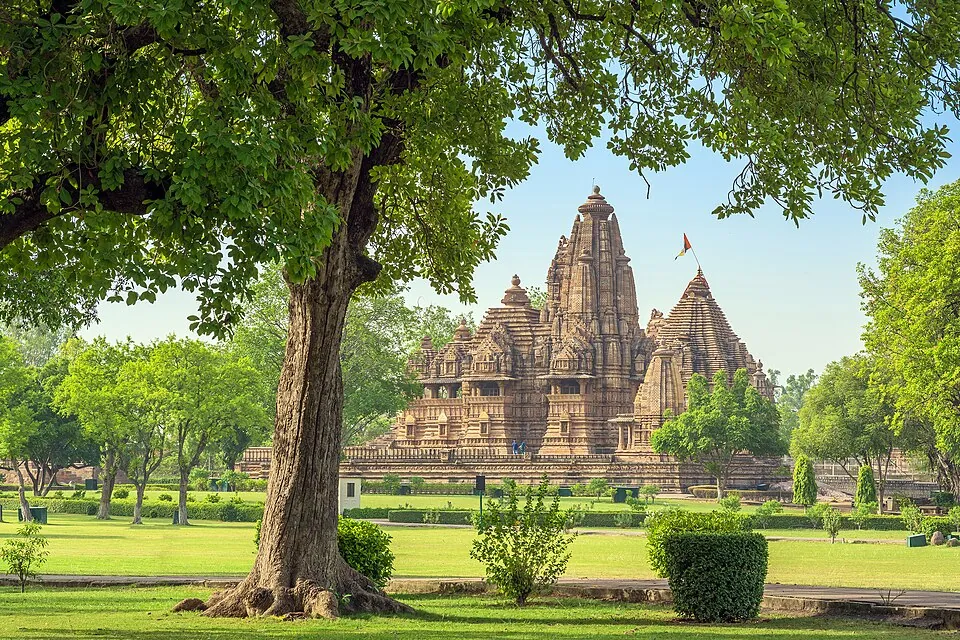
Yashovarman's Lakshmana Temple Rises at Khajuraho
Lakṣmaṇa Mandira, Khajurāho · लक्ष्मण मंदिर, खजुराहो
Built by the Chandela king Yashovarman around the middle of the tenth century, the Lakshmana Temple at Khajuraho is dedicated to Vishnu in his Vaikuntha form. It is among the earliest large temples of the Khajuraho group, now a UNESCO World Heritage site since 1986.
The Lakshmana Temple was raised in the tenth century by Yashovarman, a ruler of the Chandela dynasty, at Khajuraho in central India. Its presiding image is Vaikuntha Vishnu, a three-headed form of the god that combines human, boar and lion faces. The temple is generally dated to the mid-950s and is regarded as the first fully developed example of the Chandela style, with a raised platform, a sequence of porches, an inner sanctum and a towering spire made of clustered smaller spires. Its walls carry bands of sculpture showing gods, celestial dancers, couples and scenes of daily life, executed in fine-grained sandstone. Because inscriptions connect the building to Yashovarman and his court, it is one of the better anchored monuments of the period. In 1986 UNESCO added the Khajuraho Group of Monuments to the World Heritage List in recognition of its architecture and cultural importance. The Lakshmana Temple, though less famous than later neighbours such as the Kandariya Mahadeva, shows the early confidence of Chandela builders and the way royal patronage turned Vaishnava devotion into monumental stone architecture.
Sources
- Lakshmana Temple, Khajuraho Wikipedia · CC-BY-SA-4.0
- Q1801200 Wikidata · CC0-1.0