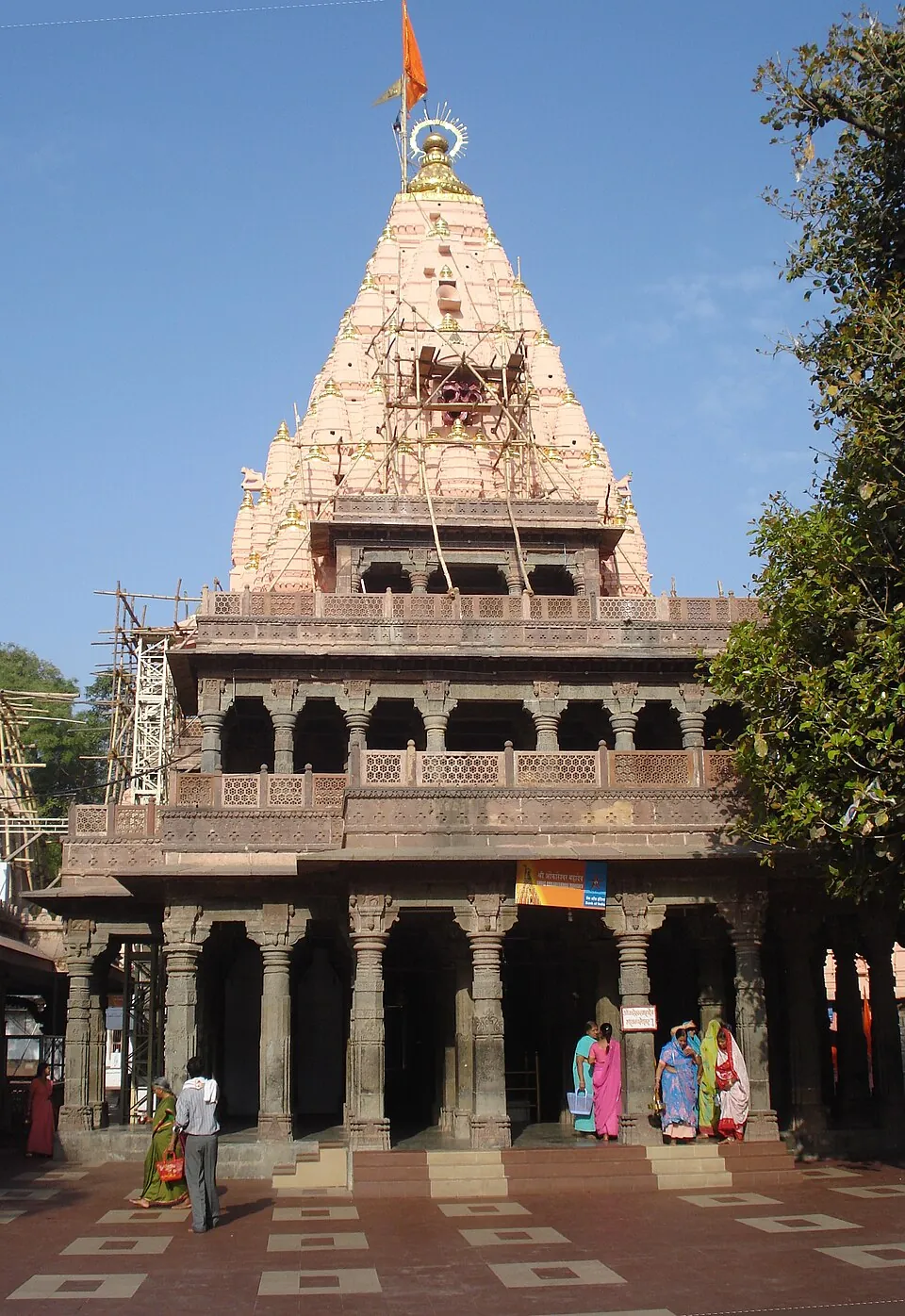
Mahākāleśvara, Jyotirliṅga Beside the Śiprā at Ujjain
Mahākāleśvara · महाकालेश्वर
The Mahākāleśvara temple at Ujjain, on the Śiprā river in Madhya Pradesh, is counted among the twelve Jyotirliṅgas of Śiva. Devotees regard its liṅga as svayambhū, self-arisen, drawing power from within itself instead of from ritual installation, and the date given here is only approximate.
Ujjain is one of India's oldest cities, and its principal Śaiva shrine is the Mahākāleśvara temple, standing beside the Śiprā river. It is listed as one of the twelve Jyotirliṅgas, the places where Śiva is said to appear as a radiant column of light. Worshippers hold the central liṅga to be svayambhū, meaning self-manifested. In this belief its power flows from within, in contrast to images and liṅgas that priests establish and then charge through mantras. Madhya Pradesh contains two Jyotirliṅgas; the other, Oṁkāreśvara, lies roughly 140 kilometres to the south. The temple's history is layered. It was a recognised centre of pilgrimage by the medieval period, when Ujjain lay within the Paramāra realm, and the building seen today is a later reconstruction. For that reason the date given here is approximate and refers to the shrine's established medieval standing, not to any single act of foundation, which is not documented. Its sanctity rests chiefly on long devotional tradition.
Sources
- Mahakaleshwar Jyotirlinga Wikipedia · CC-BY-SA-4.0
- Q2721992 Wikidata · CC0-1.0