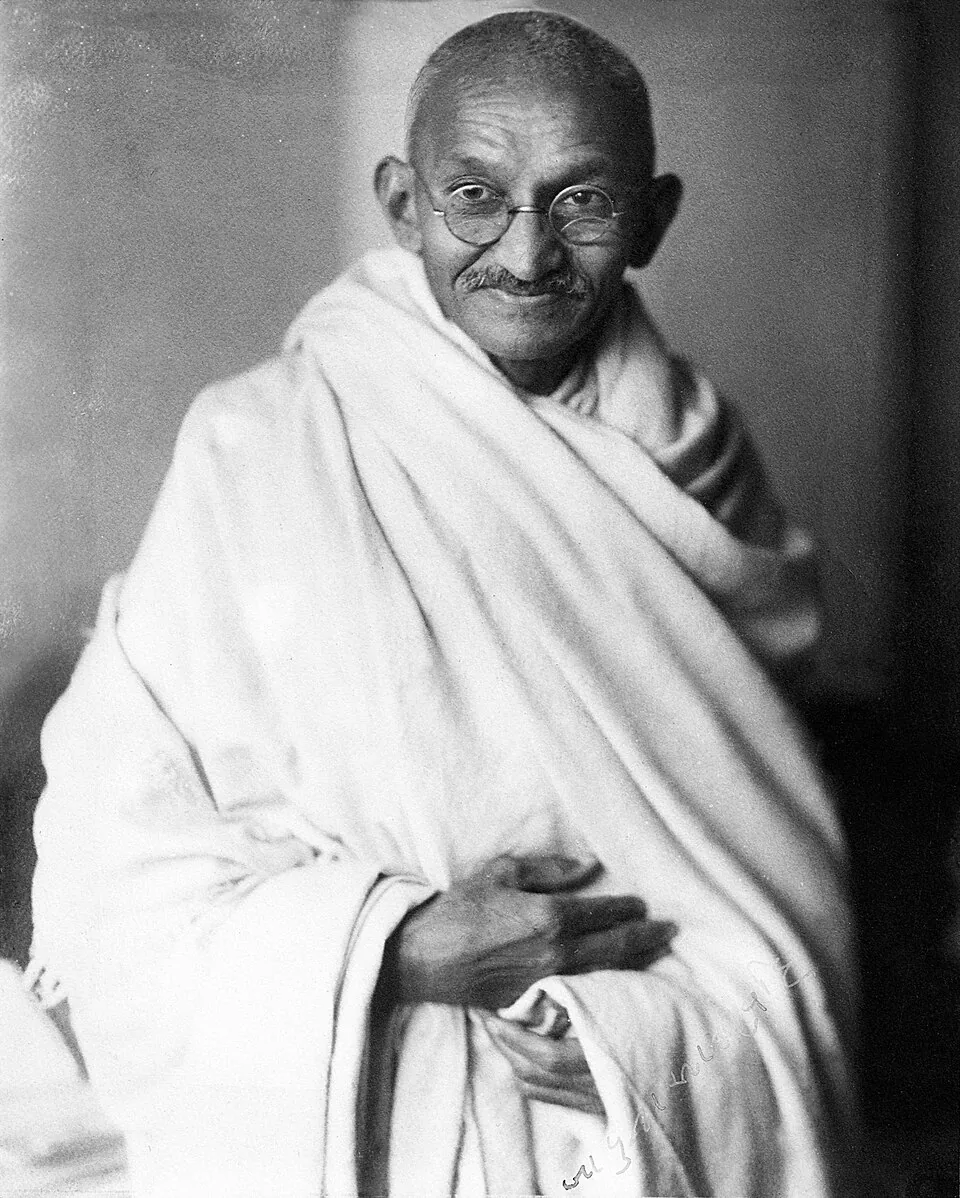
Gandhi Returns from South Africa
Mohandās Karamcand Gāndhī · मोहनदास करमचन्द गांधी
In January 1915 Mohandas Karamchand Gandhi came back to India after two decades in South Africa, where he had developed satyagraha, nonviolent resistance. Over the following decades he led the Indian independence movement, and the title Mahātmā, first used of him in 1914, became known worldwide.
Mohandas Karamchand Gandhi, born in 1869, trained as a lawyer and spent about twenty years in South Africa, where he shaped the method of satyāgraha, firm and nonviolent resistance to injustice, in campaigns for Indian settlers. He returned to India in January 1915 at the age of forty-five. On the advice of Gopāl Kṛṣṇa Gokhale, he first travelled the country to learn its conditions, and then established an āśrama near Ahmedabad. His early campaigns at Champāraṇ, Kheḍā and with Ahmedabad's mill workers brought him a following among peasants and workers as well as among the educated elite. From 1920 he guided the Indian National Congress into mass movements, among them non-cooperation, the Salt March of 1930 and the Quit India movement of 1942, all of which used peaceful civil disobedience against British rule. The honorific Mahātmā, meaning great-souled, was first used for him in South Africa in 1914 and later gained currency across the globe. India won independence in 1947, with partition causing great suffering that Gandhi sought to relieve. His ideas on nonviolence later inspired civil rights and freedom movements elsewhere, though his views and legacy are also debated by historians.
Sources
- Mahatma Gandhi Wikipedia · CC-BY-SA-4.0
- Q1001 Wikidata · CC0-1.0