Satyagraha Takes Shape in South Africa
Satyāgraha · सत्याग्रह
Satyāgraha, meaning truth force, is a method of nonviolent civil resistance developed by Mohandas Gandhi, who began its practice in South Africa from 1906 among Indians resisting discriminatory laws. He later applied it in the Indian independence movement, and it influenced civil rights and anti-apartheid campaigners elsewhere.
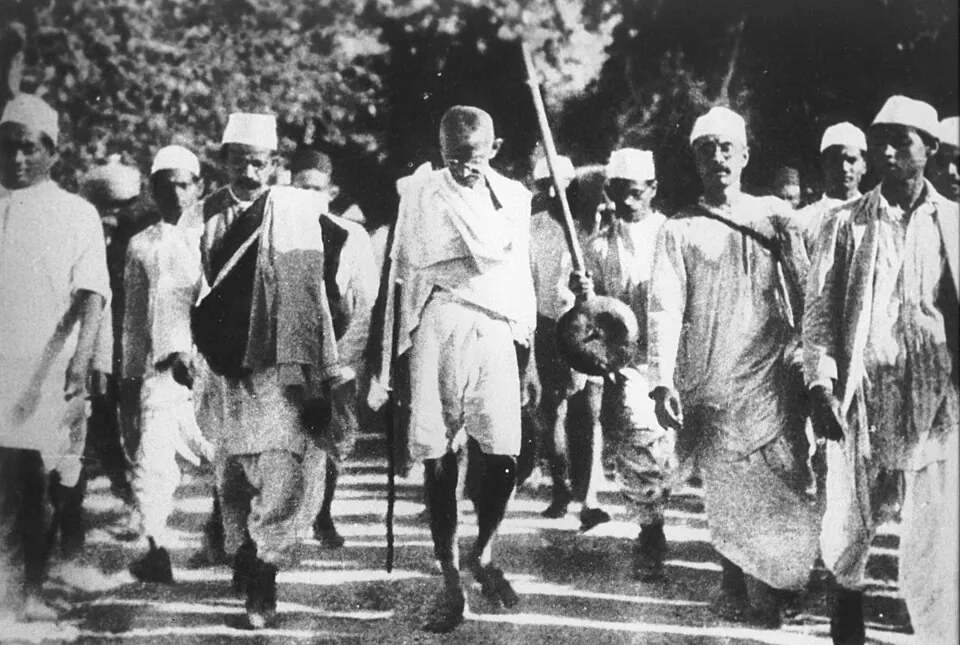
Satyāgraha, often translated as truth force, is a form of nonviolent or civil resistance, and a person who practises it is a satyāgrahī. The term and method were developed by Mohandas Karamchand Gandhi, who first put them to work in South Africa, where in 1906 Indian residents pledged to resist new discriminatory legislation without violence. The word itself was coined shortly afterwards, as the campaign needed a name distinct from passive resistance. Gandhi later brought the method home to India and used it as a central tool of the independence movement. Its ideas then travelled well beyond the subcontinent: the campaigns of Martin Luther King Jr. and James Bevel in the American Civil Rights Movement, Nelson Mandela's struggle against apartheid, and many other social-justice movements drew on satyāgraha theory. The year shown marks the 1906 start of the South African campaign, where the practice began.
Sources
- Satyagraha Wikipedia · CC-BY-SA-4.0
- Q194279 Wikidata · CC0-1.0