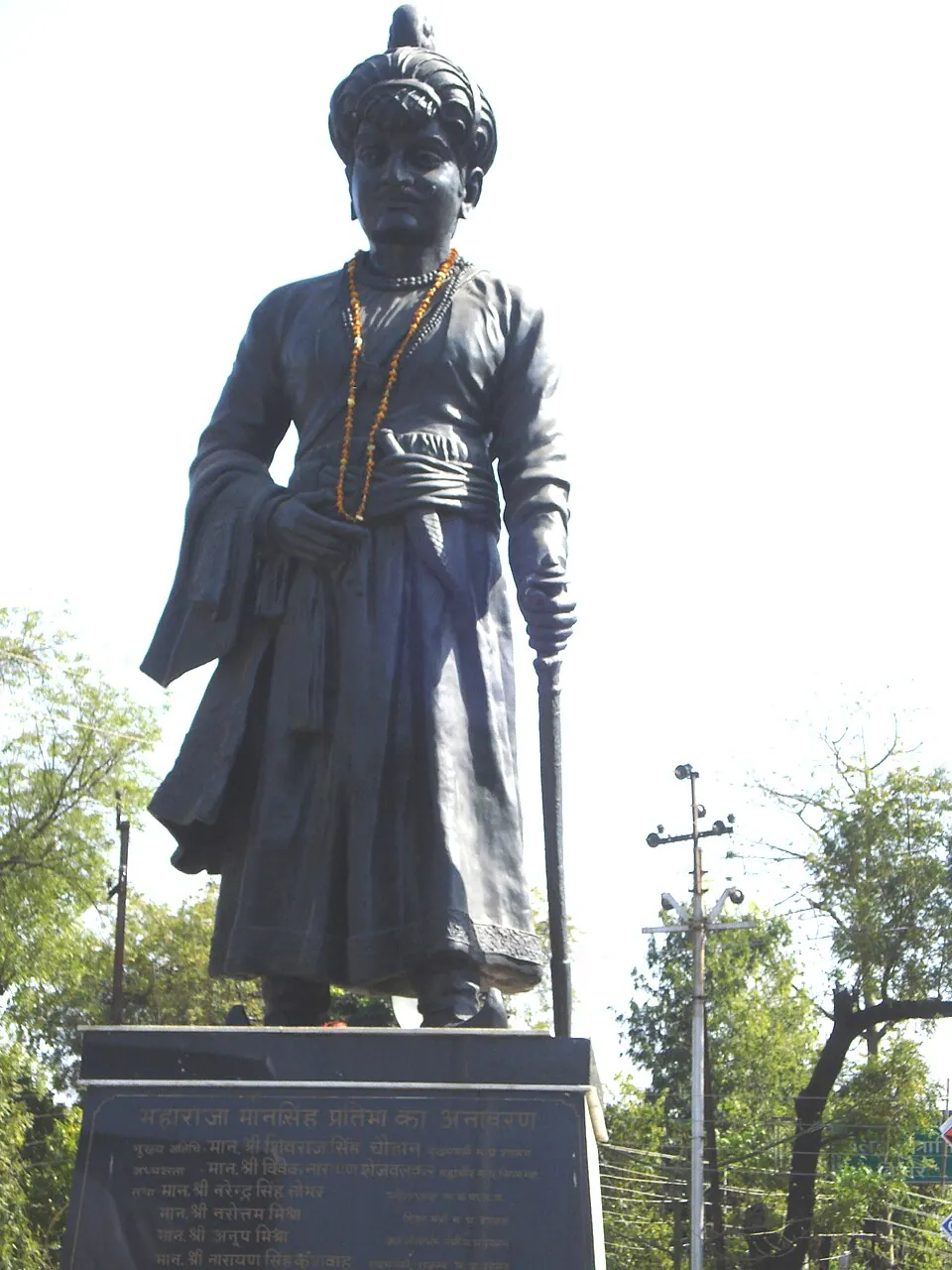
Man Singh Tomar Rules Gwalior
Mānasiṃha Tomara · मानसिंह तोमर
Man Singh Tomar held Gwalior between 1486 and 1516. A ruler of the Tomara clan, he is remembered for raising the colourful Man Mandir palace within Gwalior Fort and for patronising music, and his reign gave the city a lasting artistic reputation.
Man Singh Tomar, or Mānasiṃha, was a Rajput ruler of the Tomara clan who held Gwalior between 1486 and his death in 1516. His reign came at a time when the Delhi Sultanate under the Lodis was pressing on the smaller states of north India, and he managed to keep his kingdom for three decades, partly through negotiation and partly through the fortress's strength. He is best remembered as a builder. Inside the great hill fort of Gwalior he raised the Man Mandir palace, adorned with blue and yellow glazed tiles and carved stone, which is considered one of the finest examples of Rajput palace design before the Mughals. He was also a cultured patron of music, and his court is closely linked with the shaping of the dhrupad style of Hindustani singing, and with a treatise called the Mān Kutūhal that records the musical knowledge of his circle. After his death, his successors found Lodi pressure too strong, and Gwalior was taken by Ibrāhīm Lodī in 1518. His rule is therefore remembered as a brief, bright episode of regional power and artistic accomplishment before the coming of the Mughals.
Sources
- Man Singh Tomar Wikipedia · CC-BY-SA-4.0
- Q6746267 Wikidata · CC0-1.0