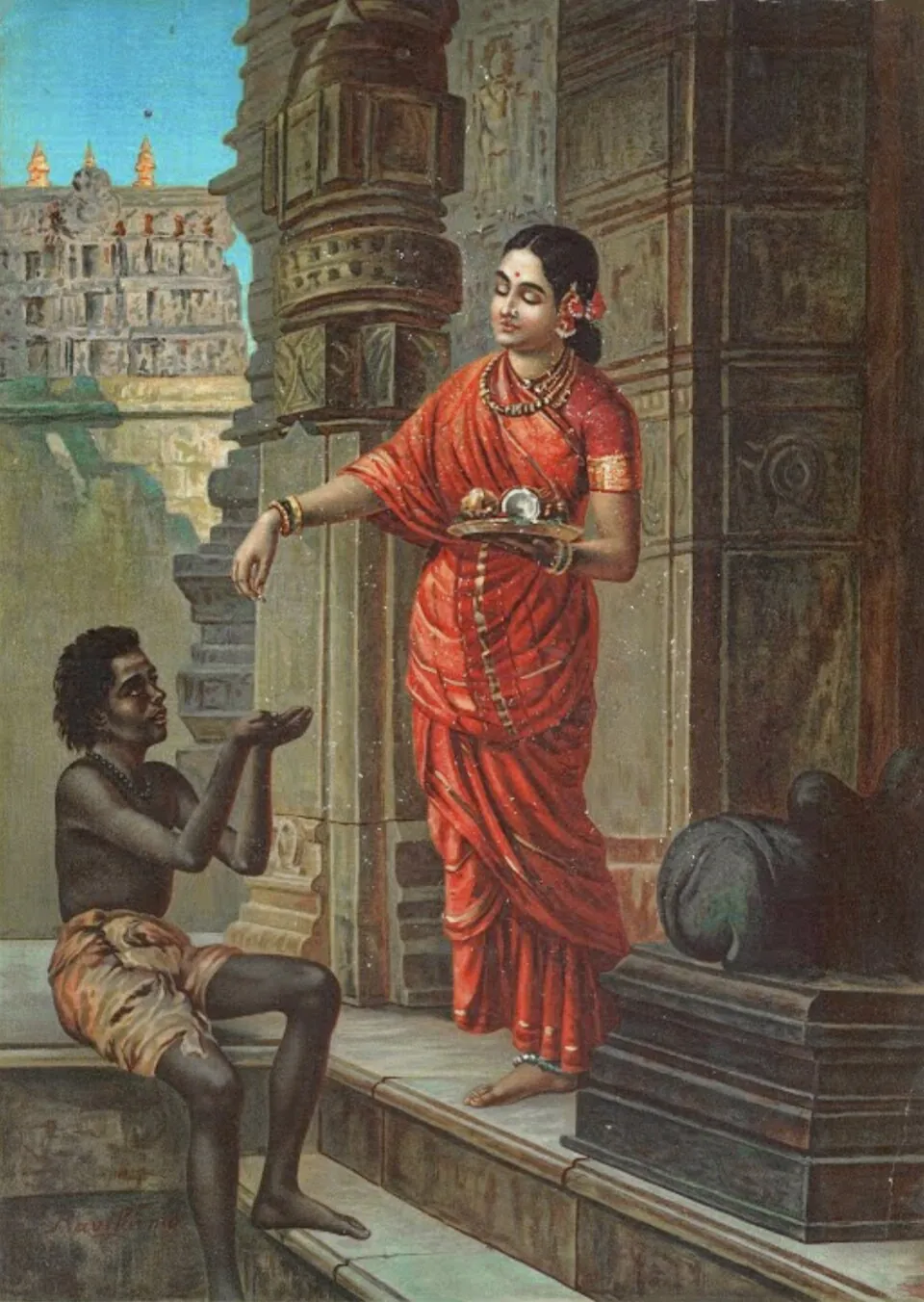
Mandodarī, Queen of Laṅkā and Counsellor of Rāvaṇa
Mandodarī · मंदोदरी
Traditional reckoning of Rāmāyaṇa chronology; not dated history.
In the Rāmāyaṇa, Mandodarī is the pious queen of Rāvaṇa of Laṅkā, daughter of the asura-architect Maya. She repeatedly urges her husband to return Sītā to Rāma. She is honoured among the Pañcakanyā, whose names tradition says remove sin. This is sacred narrative, not dated history.
Mandodarī is the principal wife of Rāvaṇa, the ruler of Laṅkā, as the Rāmāyaṇa tells it. The epic portrays her as beautiful, devout and upright. Her father is Mayāsura, ruler of the asuras, and her mother is the celestial nymph Hemā. She bears Rāvaṇa three sons: Meghanāda, also called Indrajit, Atikāya and Akṣayakumāra. Although she is aware of her husband's faults, she remains loyal to him, and she urges him again and again to restore Sītā to Rāma and follow the path of dharma. He ignores her. In one retelling Hanumān tricks her into revealing where a magical arrow is hidden, and Rāma uses it to kill Rāvaṇa. Many versions add that after the war Vibhīṣaṇa, Rāvaṇa's younger brother who joined Rāma, acted on her counsel. Tradition counts her among the Pañcakanyā, the five exemplary women whose names, when recited, are believed to dispel sin. The Rāmāyaṇa tradition places these events in remote antiquity, and the year given here follows a traditional reckoning of epic chronology. Because the poem is a literary and religious work, the date is part of sacred narrative rather than recorded history.