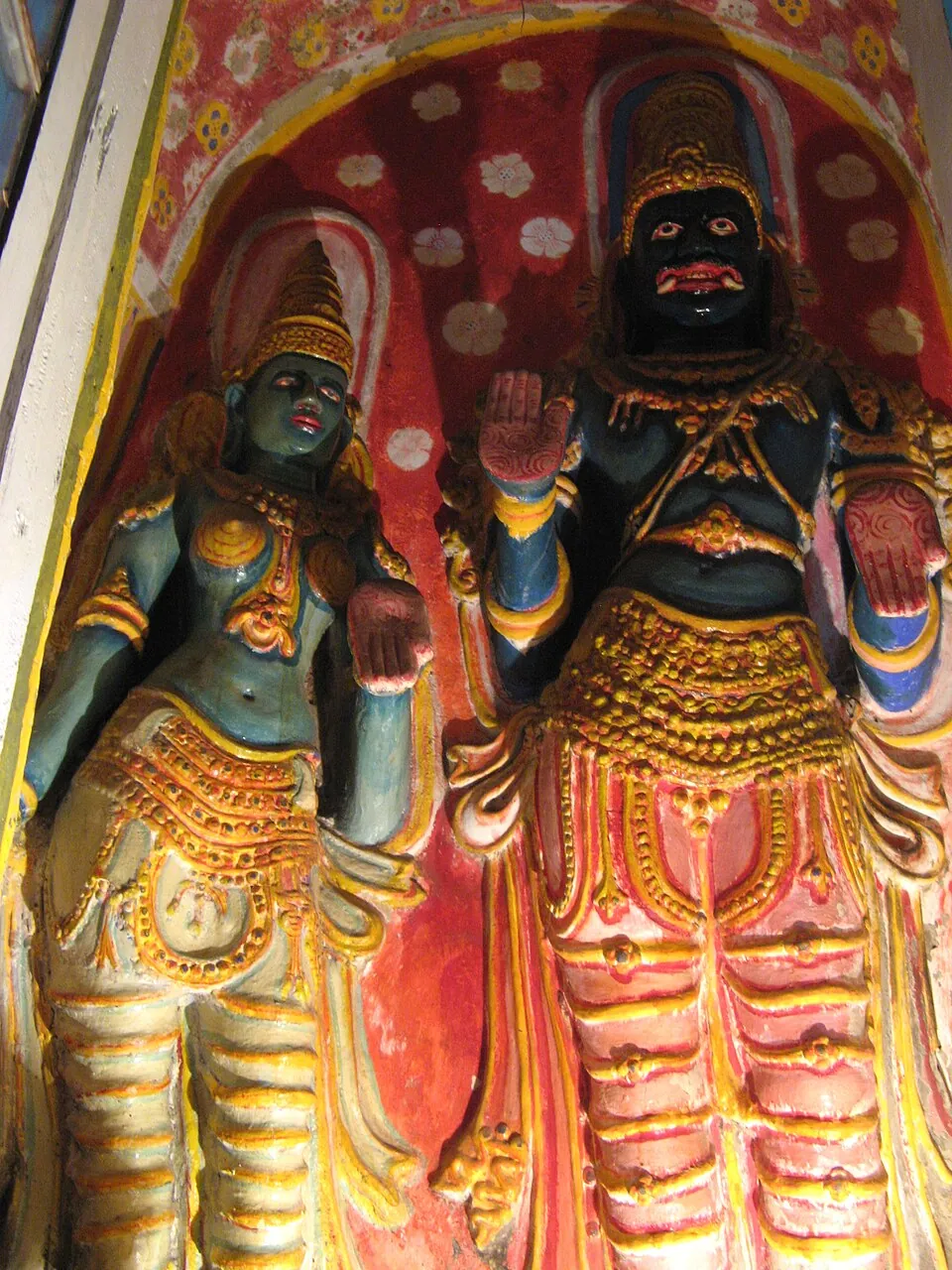
Vibhīṣaṇa Leaves Laṅkā for Rāma
Vibhīṣaṇa · विभीषण
Traditional reckoning of Rāmāyaṇa chronology; not dated history.
In the Rāmāyaṇa tradition, Vibhīṣaṇa is the younger brother of the rākṣasa king Rāvaṇa. Guided by dharma, he abandons Laṅkā and joins Rāma, and after Rāvaṇa's defeat he is made its king. He is counted among the chiranjīvis, the long-lived beings.
Vibhīṣaṇa, whose name means 'formidable' or 'terrible', is born into the rākṣasa family of Laṅkā but is described in the Rāmāyaṇa tradition as unusually righteous. He repeatedly urges his brother Rāvaṇa to return Sītā to Rāma and avoid war. When Rāvaṇa rebukes and dismisses him, Vibhīṣaṇa crosses the sea and surrenders to Rāma, who, after some debate among his allies, accepts him. His knowledge of Laṅkā's defences proves valuable in the campaign, and after Rāvaṇa falls Rāma installs him as ruler of the island. Later traditions revere him as an example of loyalty to dharma over kinship, though some retellings also view his choice as a painful betrayal of family, giving the story moral complexity. He is numbered among the eight chiranjīvis, who are believed to live on through the ages. Because the narrative is sacred tradition and not documented history, the year used here follows the traditional Rāmāyaṇa chronology and should not be taken as a historical date.
Sources
- Vibhishana Wikipedia · CC-BY-SA-4.0
- Q3285505 Wikidata · CC0-1.0