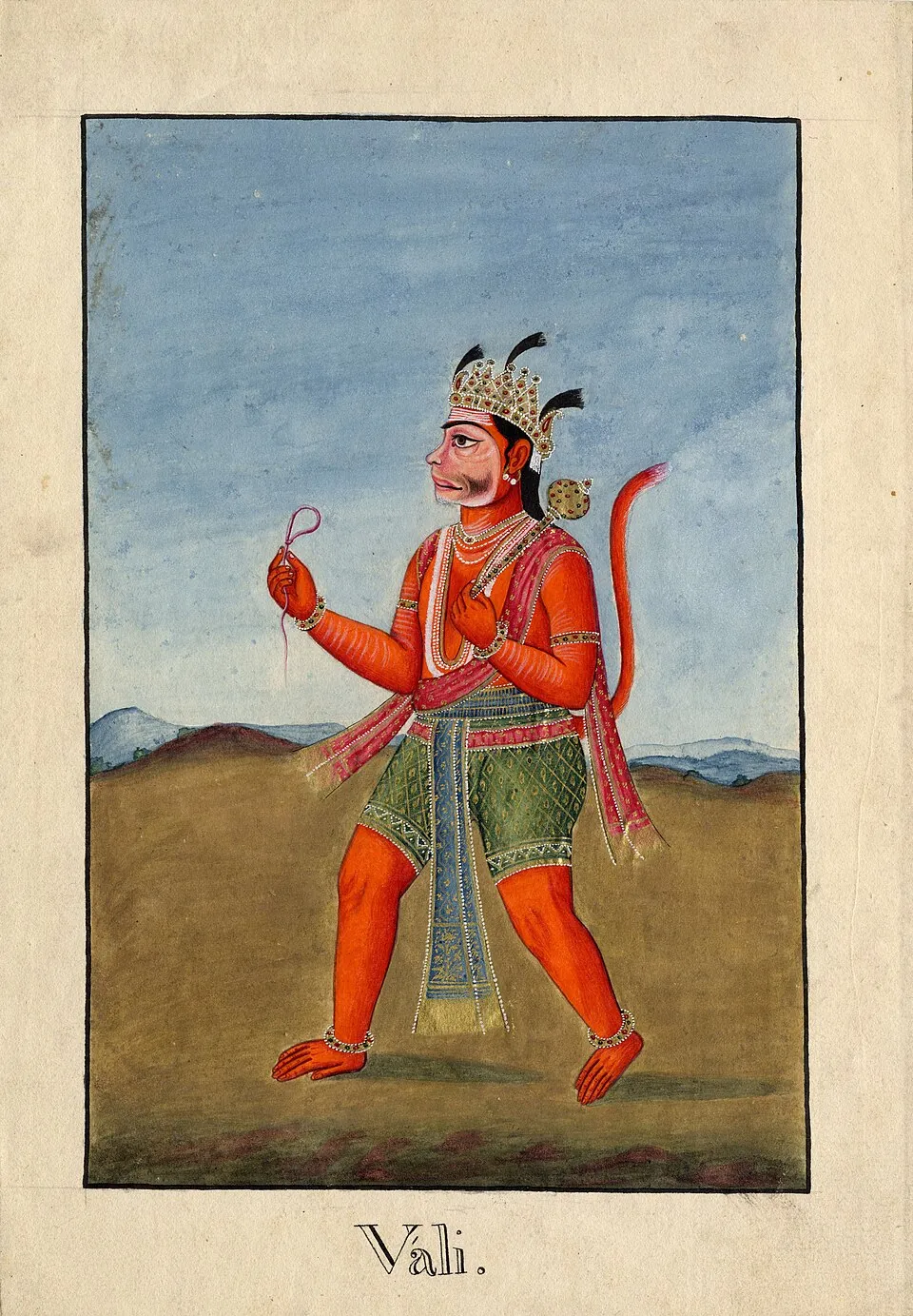
Vālī, King of Kiṣkindhā, Falls to Rāma's Arrow
Vālī · वाली
Rāmāyaṇa tradition's chronology, as reckoned by later calculation; not dated history.
In the Rāmāyaṇa, Vālī is the vānara king of Kiṣkindhā, son of Indra and brother of Sugrīva. After a quarrel drove Sugrīva into exile, Rāma took Sugrīva's side and struck Vālī down in single combat. The episode is sacred narrative, placed by tradition in the Tretā Yuga.
Vālī, also called Bali, is a vānara king of Kiṣkindhā in the Rāmāyaṇa. Tradition makes him a son of Indra, husband of Tārā and father of Aṅgada. A pendant from Indra gave him renewed strength even when close to death, which made him a formidable warrior. The central conflict arises with his younger brother Sugrīva. Believing Vālī dead after a long absence in a cave, Sugrīva took the throne, and Vālī, on returning, drove him out. When Rāma and Lakṣmaṇa met Sugrīva during their search for Sītā, they agreed to help one another. In the duel between the brothers, Rāma shot Vālī from concealment, an act that the epic itself presents as troubling and which later commentators and tellers have debated at length. Sugrīva then became king, and his vānara forces joined the search for Sītā. In this entry the date comes from a traditional reckoning of the epic age and has no historical standing; it records how the Rāmāyaṇa tradition situates the story.
Sources
- Vali (Ramayana) Wikipedia · CC-BY-SA-4.0
- Q4390883 Wikidata · CC0-1.0