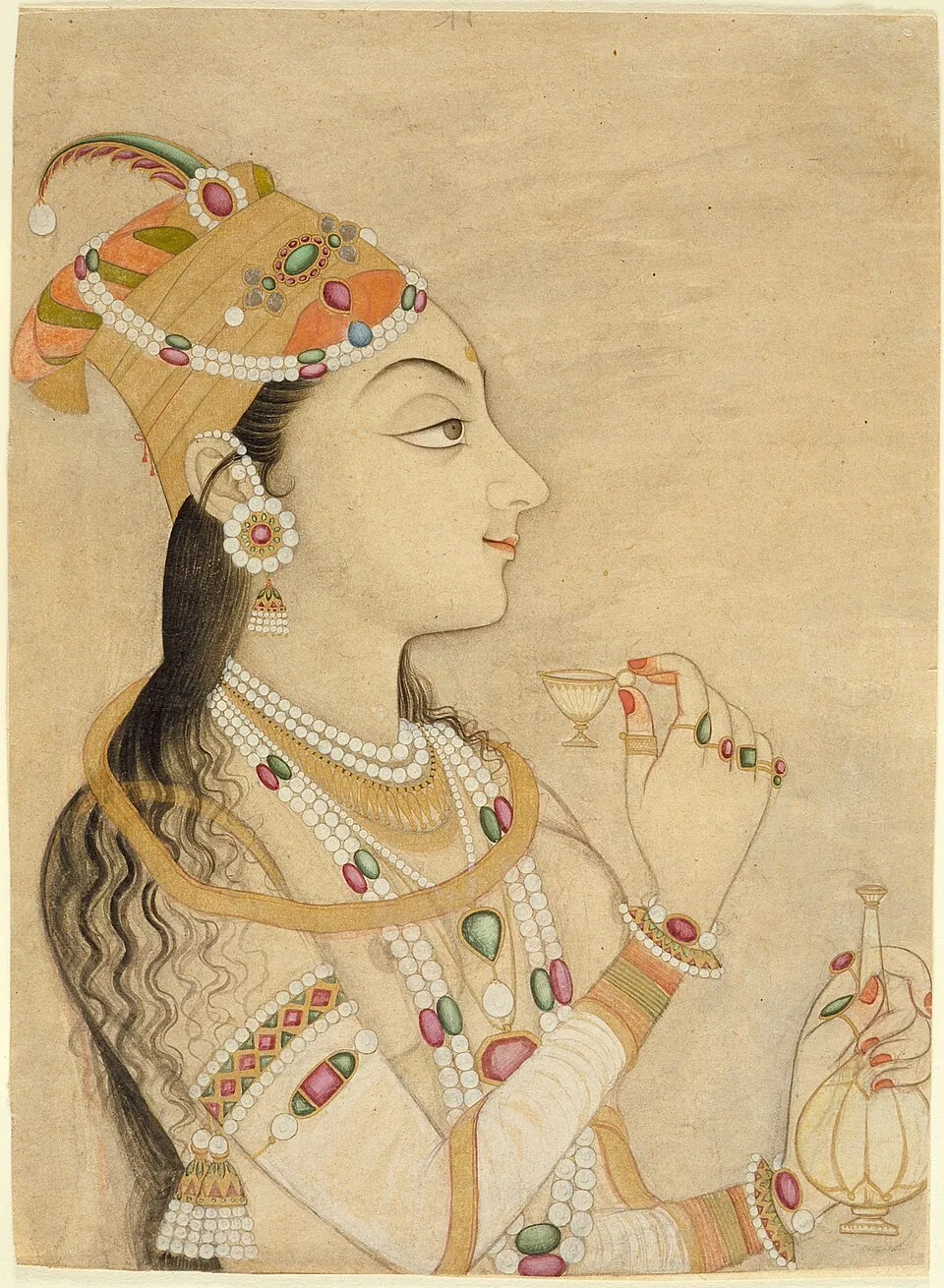
Nūr Jahān, Empress of Jahāngīr
Nūr Jahān · نور جہاں
Nūr Jahān, born Mihr-un-Nisā, married the Mughal emperor Jahāngīr in 1611 and became his twentieth wife and chief consort. Politically able and decisive, she wielded unusual power for over a decade, had coins struck in her name and exercised influence while the emperor was often unwell.
Nūr Jahān, meaning Light of the World, was born Mihr-un-Nisā in 1577 and married the Mughal emperor Jahāngīr in 1611, becoming his twentieth wife and chief consort. Jahāngīr suffered from fragile health and was prone to hunting, drink and opium, and she took a leading hand in the empire's business. Some historians think she was the real ruler behind the throne through some twelve years. She enjoyed honours that no earlier or later Mughal woman received, including coinage struck in her name and the right to issue orders carrying her seal. Her family also rose with her, notably her father Iʿtimād-ud-Dawla, whose tomb at Agra she commissioned, and her brother Āṣaf Khān, whose daughter Mumtāz Maḥal married Shāh Jahān. She is also known for her patronage of architecture, gardens, textiles and perfume. After Jahāngīr died in 1627 she lost influence in the succession struggle and lived in Lahore until her death in 1645. Historians continue to debate how much of the empire's rule was in her hands.