The Painted Grey Ware Culture of the Gangetic Plain
Painted Grey Ware is an Iron Age culture of northern India, usually dated from about 1200 to 500 BCE, known for fine grey pottery with black geometric designs. Its farming villages, horses and early ironworking mark the rise of towns in the western Gangetic plain.
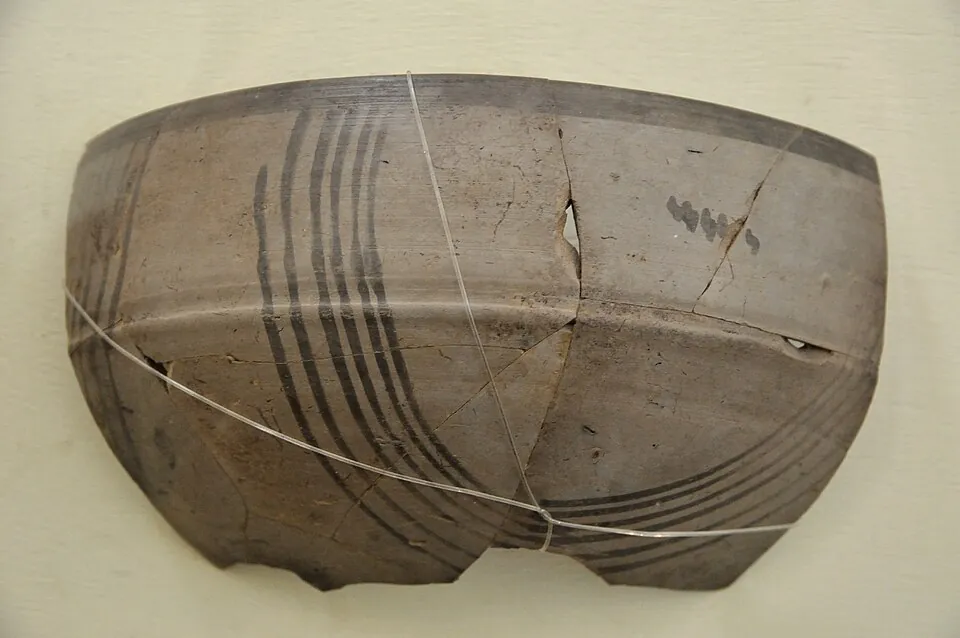
Painted Grey Ware, or PGW, takes its name from a thin, well-fired grey pottery decorated in black with simple geometric patterns. It is found across the Ghaggar-Hakra valley and the upper Gangetic plain, and archaeologists conventionally date the culture from about 1200 to 600 or 500 BCE, though some propose a wider span. It followed the Cemetery H and black-and-red ware traditions in the same area, while black-and-red ware continued in the east and in central India. More than fifteen hundred PGW sites had been recorded by 2018, and most were modest farming villages. A few dozen grew large enough to be called towns, and the biggest had earthen ramparts and moats topped with wooden palisades, though these were simpler than the great city fortifications that appear after 600 BCE. Finds point to domesticated horses, ivory working and the first use of iron. Many scholars connect the culture with the society described in the later Vedic texts, although matching pottery to a people is debated. PGW therefore offers physical evidence for a formative period of north Indian urban life.
Sources
- Painted Grey Ware culture Wikipedia · CC-BY-SA-4.0
- Q2525293 Wikidata · CC0-1.0