The Ochre Coloured Pottery Culture of the Gangetic Plain
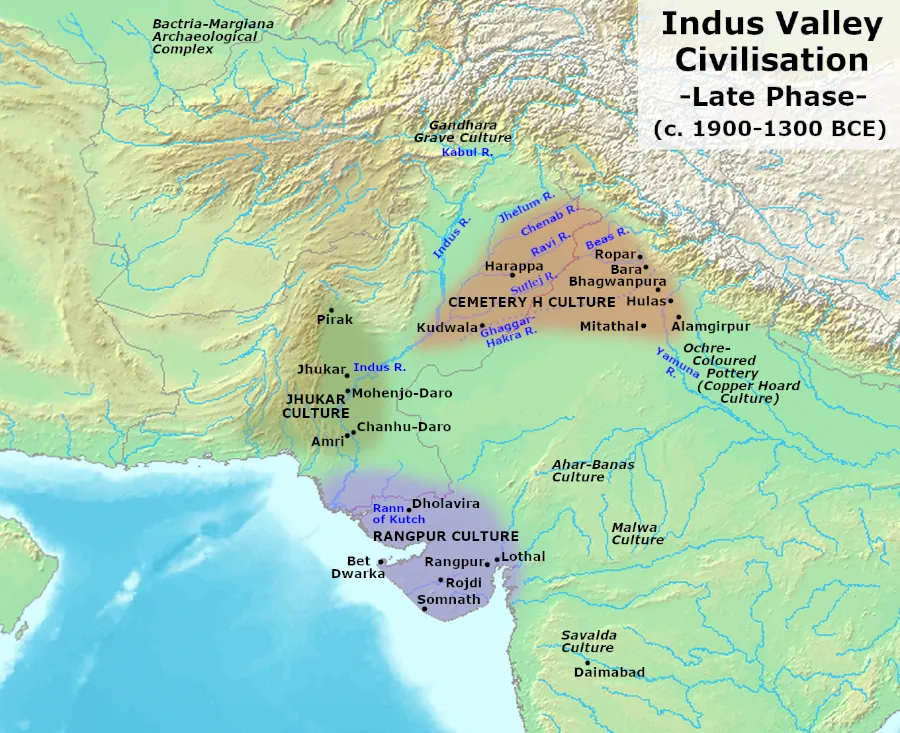
Archaeologists use the name Ochre Coloured Pottery for a Bronze Age tradition of northern India, usually placed between 2000 and 1500 BCE. Its sites lie between eastern Punjab, north-eastern Rajasthan and western Uttar Pradesh, and its remains show links with Late Harappan and Vedic-era cultures before Painted Grey Ware followed.
Ochre Coloured Pottery, or OCP, is the label archaeologists give to a Bronze Age culture that flourished across the Indo-Gangetic Plain. Most scholars date it to roughly 2000 to 1500 BCE. Its settlements cluster in a belt running from the eastern Punjab through the north-east of Rajasthan into western Uttar Pradesh, just east of the old Harappan heartland. The name refers to the weathered, reddish-orange surface of its wares. Its finds resemble both Late Harappan and later Vedic-period material, which has made the culture a focus of debate. Akinori Uesugi regards it as a continuation of the earlier Harappan Bara style. Asko Parpola suggests that carts discovered in OCP contexts may reflect Indo-Iranian speakers moving into the subcontinent and meeting Late Harappan communities. How far pottery styles can be tied to language or ethnic groups remains contested. OCP represents the final phase of the Bronze Age in North India. Painted Grey Ware replaced it, and Northern Black Polished Ware came later, together charting the shift toward the iron-using societies of the early historic Gangetic world.
Sources
- Ochre Coloured Pottery culture Wikipedia · CC-BY-SA-4.0
- Q2663163 Wikidata · CC0-1.0