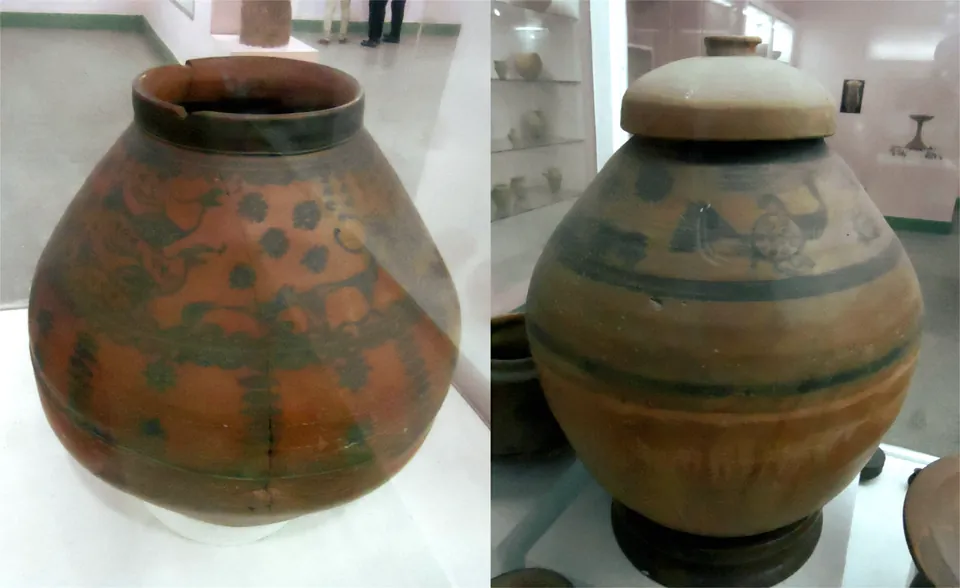
Cemetery H Culture of the Punjab Plains
Cemetery H was a Bronze Age culture of Punjab, Haryana and western Uttar Pradesh, dated roughly 1900 to 1300 BCE. It is seen as a regional late phase of the Harappan civilisation, and some scholars also link it with the debated Indo-Aryan migrations.
The Cemetery H culture takes its name from an excavated burial ground at Harappa, and it flourished in the north of the subcontinent, chiefly in Punjab, Haryana and the western part of Uttar Pradesh. Archaeologists place it between roughly 1900 and 1300 BCE. Most scholars treat it as one regional form of the late Harappan, or Indus Valley, civilisation, together with the Jhukar of Sindh and the Rangpur tradition in Gujarat, two neighbouring variants that show how the older urban tradition changed as cities faded. Its distinctive burial practices and painted pottery set it apart from the mature Harappan phase. Some researchers have also considered it a possible phase in the Indo-Aryan migrations, a question that remains debated and depends on how archaeological and textual evidence is read. For readers of the timeline, the culture is useful because it fills the gap between the urban Indus age and the early Vedic period in the same northern region, reminding us that the transition was gradual and varied rather than an abrupt break.
Sources
- Cemetery H culture Wikipedia · CC-BY-SA-4.0
- Q2364797 Wikidata · CC0-1.0