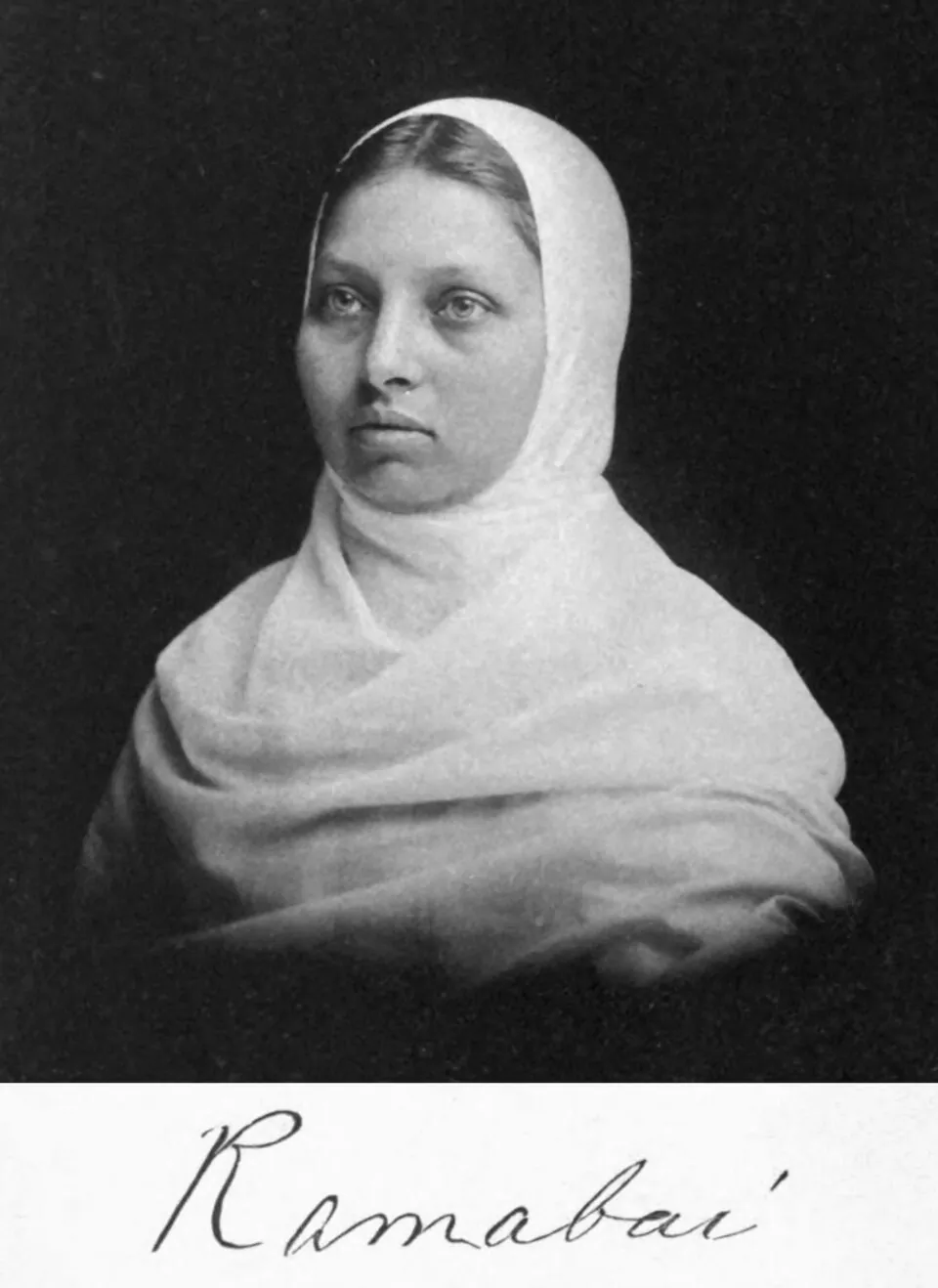
Pandita Ramabai Joins the 1889 Congress Session
Paṇḍitā Ramābāī · पंडिता रमाबाई
Pandita Ramabai Sarasvatī, who lived from 1858 to 1922, was a Sanskrit scholar, social reformer and Christian convert, one of ten women delegates at the Indian National Congress session of 1889. She founded Sharada Sadan for child widows and the Mukti Mission.
Pandita Ramabai Sarasvatī, born on 23 April 1858 and dying on 5 April 1922, was a social reformer and Christian missionary. Once Calcutta University's scholars had tested her, she became the first woman to receive the titles Paṇḍitā and Sarasvatī, marking her as a Sanskrit scholar. In 1883 she gave evidence before the Hunter Commission in favour of women's education in India. During a stay in England in the early 1880s she converted to Christianity, and she then travelled widely in the United States to raise money for destitute Indian women. With those funds she opened Sharada Sadan, a home for learning, for child widows. In 1889 she was among ten women delegates to the session of the Indian National Congress, the date chosen for this entry. In the late 1890s she founded the Mukti Mission, a Christian charitable centre in the village of Kedgaon, some forty miles east of Pune, later called the Pandita Ramabai Mukti Mission. She is remembered as a pioneering advocate for the education and dignity of women, particularly widows, in nineteenth-century India.
Sources
- Pandita Ramabai Wikipedia · CC-BY-SA-4.0
- Q94889 Wikidata · CC0-1.0