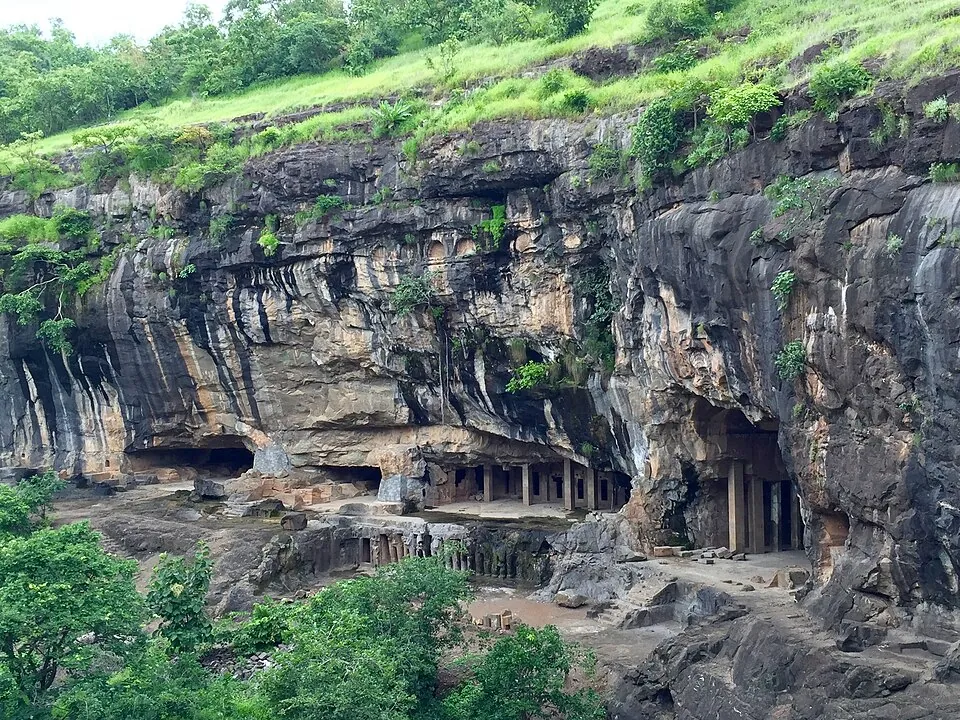
Pitalkhora, Early Buddhist Caves of the Deccan
Pitalkhora, in the Western Ghats of Maharashtra, is a group of fourteen rock-cut Buddhist caves that go back to about the third century BCE. It is counted among the earliest surviving examples of rock-cut architecture in India and lies not far from Ellora.
High in the Satmala hills of the Western Ghats, the Pitalkhora caves form a monastic complex of fourteen excavations cut straight into the basalt cliff. The site is commonly assigned to the third century BCE, which puts its earliest work in the age of the Mauryan empire and its successors and makes it one of the oldest known rock-cut ensembles in the subcontinent. It was a Buddhist establishment, with halls for worship and cells for monks, and it sat beside an old trade route across the Deccan that linked inland markets with the western ports. Today it lies about forty kilometres from Ellora and is reached by descending a steep stairway beside a waterfall, so the setting has an almost hidden quality. Because activity at the site continued over a long period, the caves record changes in style from plain early forms to richer carving. Pitalkhora matters to historians of art because it shows how the habit of imitating timber buildings in stone began in western India before the better-known caves at Ajanta and Ellora were made. The beginning date is approximate and rests on stylistic and epigraphic study.
Sources
- Pitalkhora Wikipedia · CC-BY-SA-4.0
- Q15040934 Wikidata · CC0-1.0