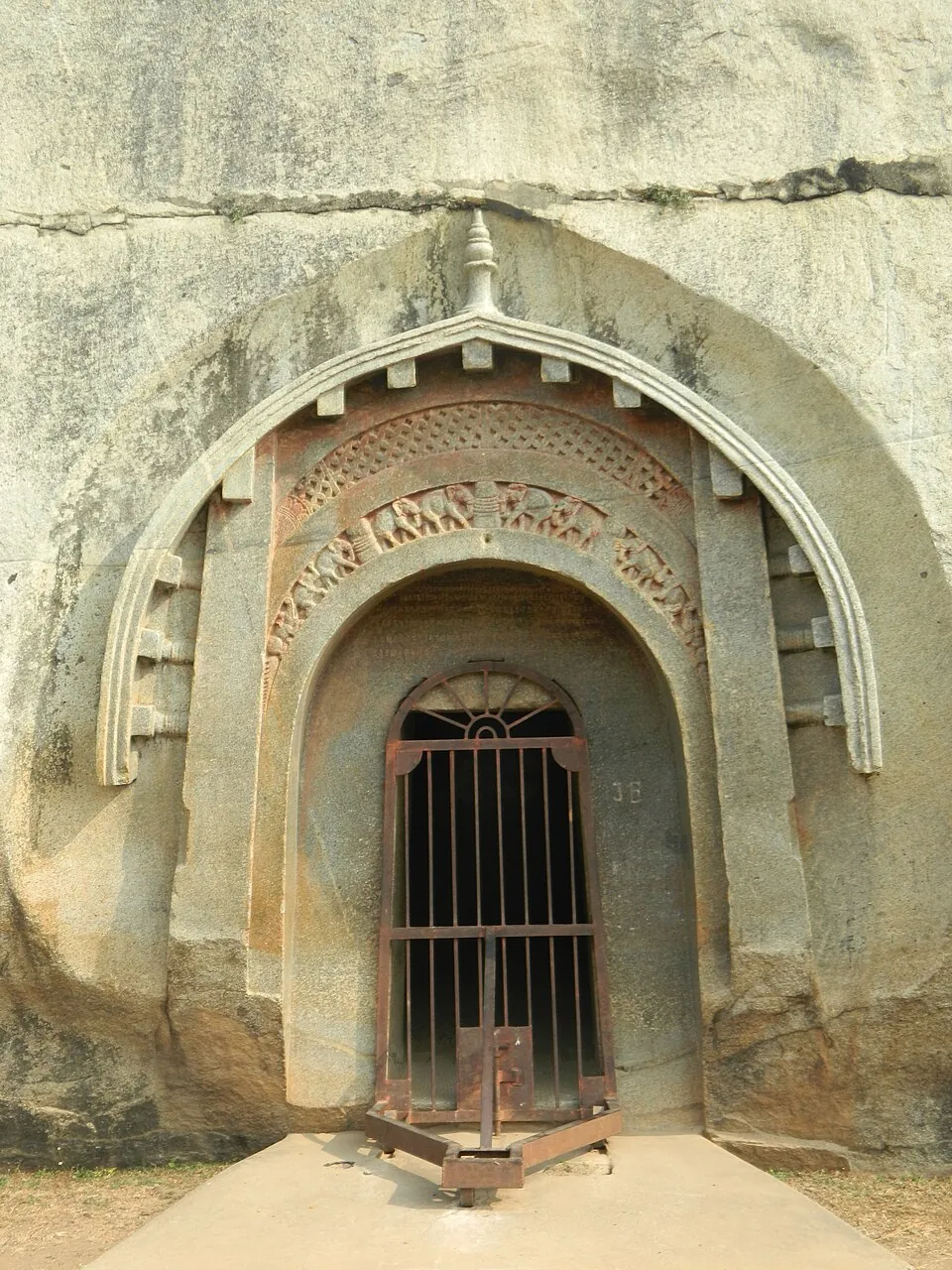
Lomas Rishi Cave Carved in the Barabar Hills
Lomaś Ṛṣi Guhā · लोमस ऋषि गुफा
The Lomas Rishi Cave in the Barabar hills of Bihar was cut during Aśoka's reign in the third century BCE. Its hut-style entrance, shaped as an ogee chaitya arch, is the earliest surviving example of a motif that spread across Indian rock-cut architecture.
Among the hand-hewn Barabar caves of Bihar, in the Jehanabad district, stands the Lomas Rishi Cave, also known as the Lomas Rishi grotto. Carved as a sanctuary under Aśoka, in the third century BCE, it belongs to the Mauryan era and within the sacred architecture linked to the Ājīvikas, an ascetic movement that competed with Jainism and eventually died out. Unlike most neighbouring Barabar caves, it has no inscription dedicating it to the Ājīvikas, so some scholars think Aśoka may have intended it for Buddhists instead. Its great claim to attention is the facade. The hut-style entrance carries the earliest surviving ogee arch, the chaitya arch or candraśālā, which became a recurring feature of rock-cut buildings and carved decoration for centuries and clearly imitates structures once made in wood and plant materials. Along with the nearby Sudāmā cave, many scholars see it as a prototype for the Buddhist cave halls of the western Deccan that were created between the second century BCE and the second century CE.
Sources
- Lomas Rishi Cave Wikipedia · CC-BY-SA-4.0
- Q19323329 Wikidata · CC0-1.0