Bulandi Bagh, Palace Ground of Mauryan Pāṭaliputra
Bulandī Bāgh · बुलंदी बाग
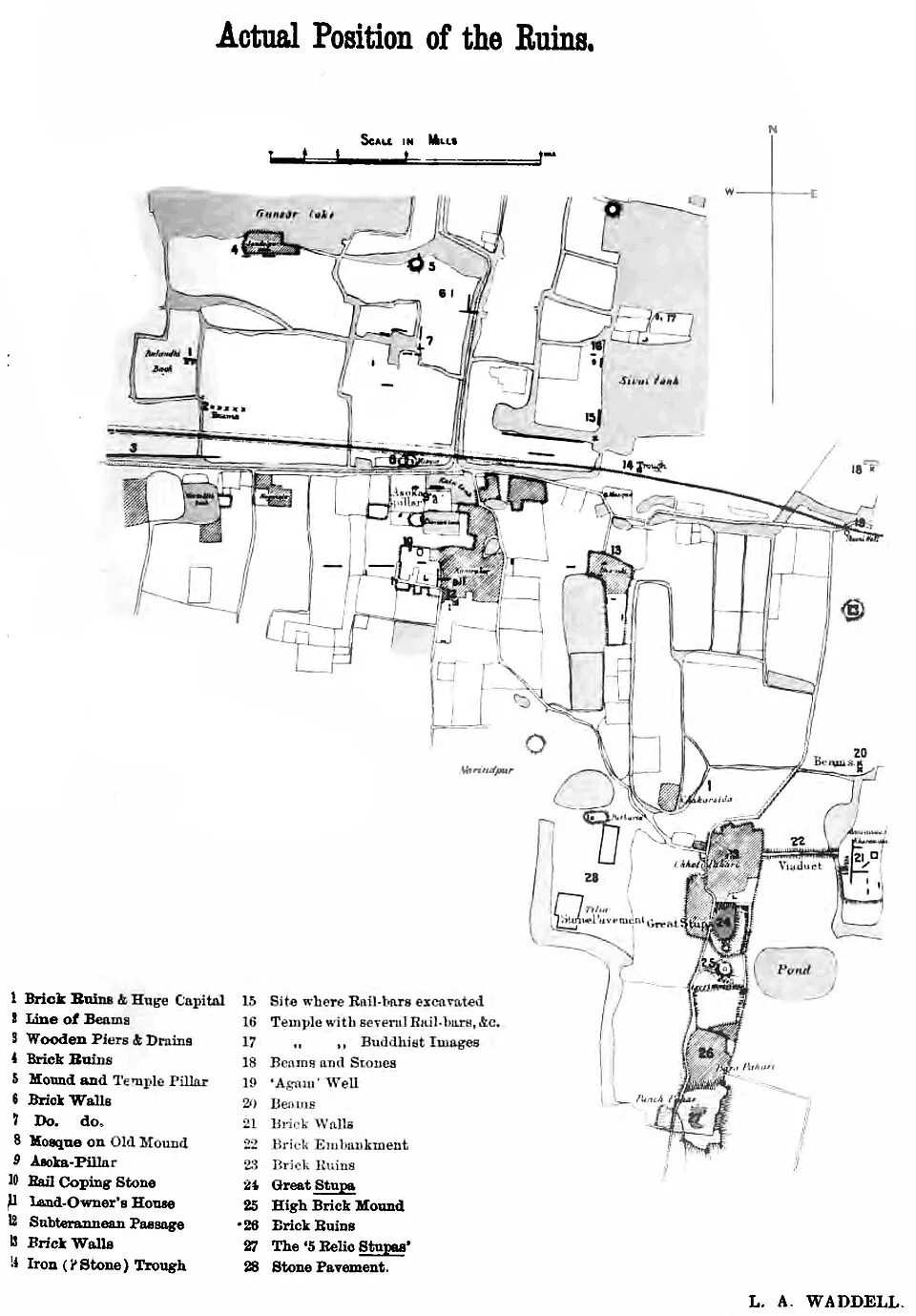
Bulandi Bagh, in modern Patna, belongs to the buried city of Pāṭaliputra. Digging there in 1895 brought up the great Pāṭaliputra capital, plus timber barriers thought to be city defences. Many scholars think the area lay within the Mauryan royal palace.
The Bulandi Bagh quarter lies north of Patna's railway station, over the old city of Pāṭaliputra. It is chiefly famous for a huge carved capital, discovered in 1895 by L. A. Waddell, a carved stone crowned with volutes and palmettes that shows both Indian and foreign artistic influences. Digging also revealed long lines of timber, understood to be the palisades that once guarded the capital, a type of defence that Greek writers such as Megasthenes described for the city. Many scholars suppose that this ground once belonged to the palace precinct of the Mauryan kings. Further work was done there in 1912 and 1913 by the American archaeologist David Brainard Spooner for the Archaeological Survey of India. He mainly worked at Kumrahar, to the south, but his Bulandi Bagh trenches also yielded timber stockades, early punch-marked coins and clay figurines, among them a laughing boy's head and a dancer. The date given is an approximate estimate for the Mauryan phase.
Sources
- Bulandi Bagh Wikipedia · CC-BY-SA-4.0
- Q27995906 Wikidata · CC0-1.0