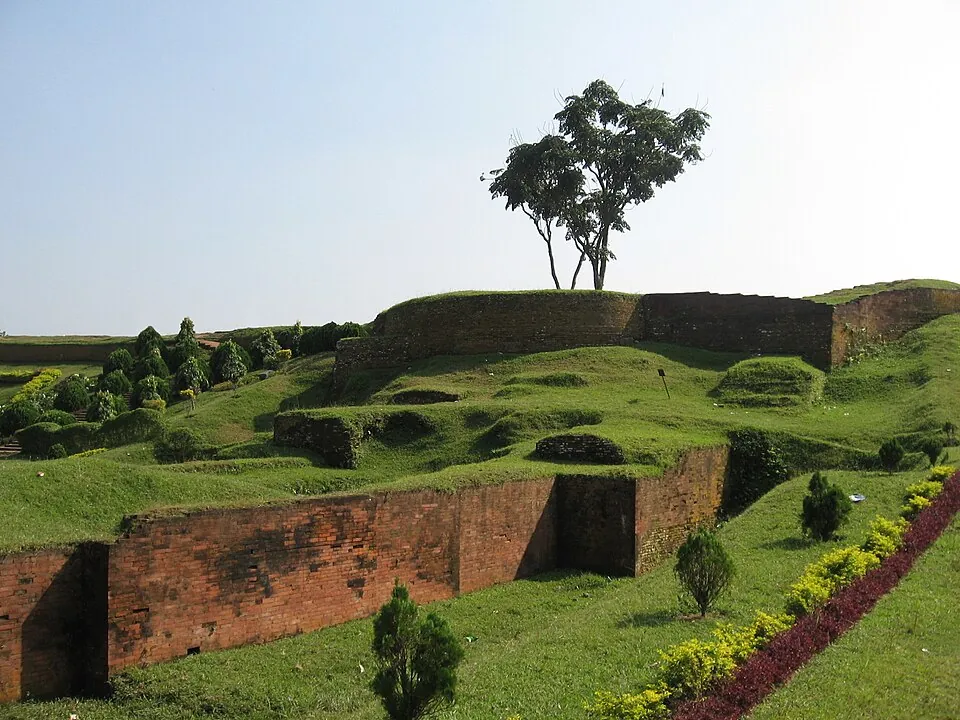
Mahasthangarh, Earliest City Site in Bangladesh
Mahāsthāngaṛh · महास्थानगढ़
Mahasthangarh in Bogra district is the earliest urban archaeological site found so far in Bangladesh. It preserves the remains of the ancient city of Puṇḍranagara, or Paundravardhanapura. A limestone slab with a Prakrit land grant in Brāhmī, found in 1931, dates it to at least the third century BCE.
Mahasthangarh is the oldest urban archaeological site discovered to date in Bangladesh. The village of Mahasthan, in Shibganj upazila of Bogra District, holds the ruins of an ancient city called Puṇḍranagara, or Paundravardhanapura, within the land of Puṇḍravardhana. In 1931 a limestone slab carrying six lines in Prakrit, written in the Brāhmī script, was found there. It records a grant of land and shows that the site existed at least by the third century BCE. The city was significant during the Mauryan empire, which indicates that the Gangetic political world reached deep into Bengal at an early date. Its fortified area continued in use until about the eighth century CE, so the settlement lasted for roughly a thousand years. The year chosen, about 300 BCE, follows the date of the inscription. The site is a primary source for the early history of Bengal, and later layers include Gupta and Pāla period remains and Buddhist and Hindu structures.
Sources
- Mahasthangarh Wikipedia · CC-BY-SA-4.0
- Q3085127 Wikidata · CC0-1.0