Śiśupālgarh, Fortress Capital of Ancient Kalinga
Śiśupālagaḍa · ଶିଶୁପାଳଗଡ଼
Śiśupālgarh, in Khurda district, Odisha, is a large, well-preserved early historic fortified site first occupied in the seventh to sixth centuries BCE. It is identified with Kharavela's Kalinganagara and with Aśoka's Tosali, making it a key site for the ancient Kalinga region.
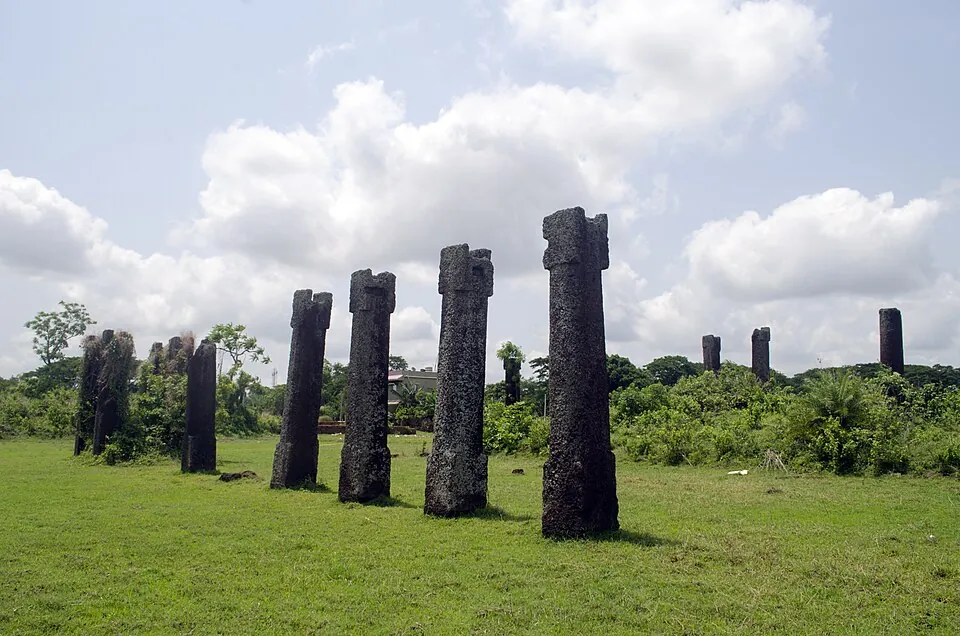
Śiśupālgarh stands in Khurda district, Odisha, and preserves the ruins of a large fortified settlement. People are thought to have lived there from about the seventh or sixth century BCE, and over time it grew into a fortification among the biggest and most intact of its early historic period in India. Scholars regard it as the ancient capital of Kalinga, and they identify it with Kalinganagara, the capital of King Khāravela, and with Tosali, the administrative centre mentioned in Aśoka's edicts. Its earthen and stone ramparts enclose a rectangular area with gateways, and excavation has provided a sequence of occupation that stretches from early settlement through the Mauryan age and beyond. The date used here, around 300 BCE, is approximate and stands for the period of Mauryan contact and fortification, while the site's earliest life began centuries before. The place shows that Kalinga had a major urban centre well before Aśoka's conquest of the region, and it is central for understanding trade, power and city life along the eastern coast of ancient India.
Sources
- Sisupalgarh Wikipedia · CC-BY-SA-4.0
- Q3485360 Wikidata · CC0-1.0